
Introduction
When business owners think about pest control, they often think about one thing:
The cost of treatment.
But in reality, the cost of eliminating an infestation is often one of the smallest expenses associated with a commercial pest problem.
In Long Beach, Seal Beach, Huntington Beach, Torrance or Newport Beach? Dr. Pest works these cities every week. Call (562) 488-7455 for a free inspection and a written quote before any work starts, or see the city we cover nearest you.
A single rodent, cockroach, or ant infestation can affect far more than your building. It can interrupt operations, damage inventory, create health concerns, impact employee morale, and even harm your company’s reputation.
Whether you operate a restaurant, warehouse, manufacturing facility, office, healthcare practice, apartment community, or retail store, preventing pests is often significantly less expensive than dealing with the consequences of an established infestation.
In this article, we’ll explore the hidden costs of commercial pest problems and why proactive pest management is an important part of protecting your business.
What You’ll Learn
- The true financial impact of commercial pest infestations
- Hidden costs many businesses overlook
- Which industries face the greatest risk
- Why prevention costs less than emergency treatment
- How ongoing pest management protects your investment
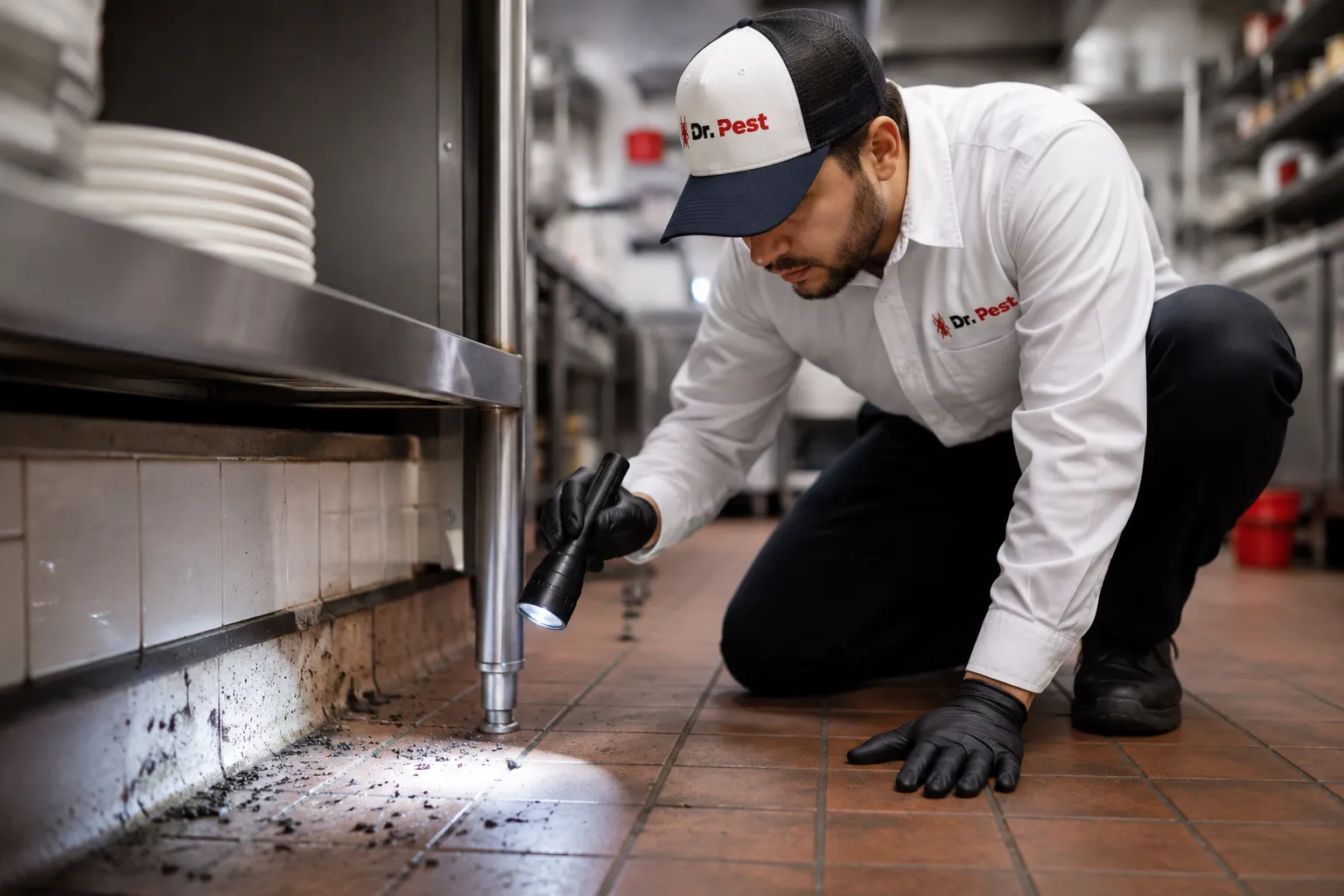
Why Prevention Is Good Business
Most commercial pest infestations don’t happen overnight.
They develop gradually.
Unfortunately, by the time pests become visible, they’ve often already created problems behind the scenes.
A proactive pest management program isn’t simply about eliminating insects or rodents.
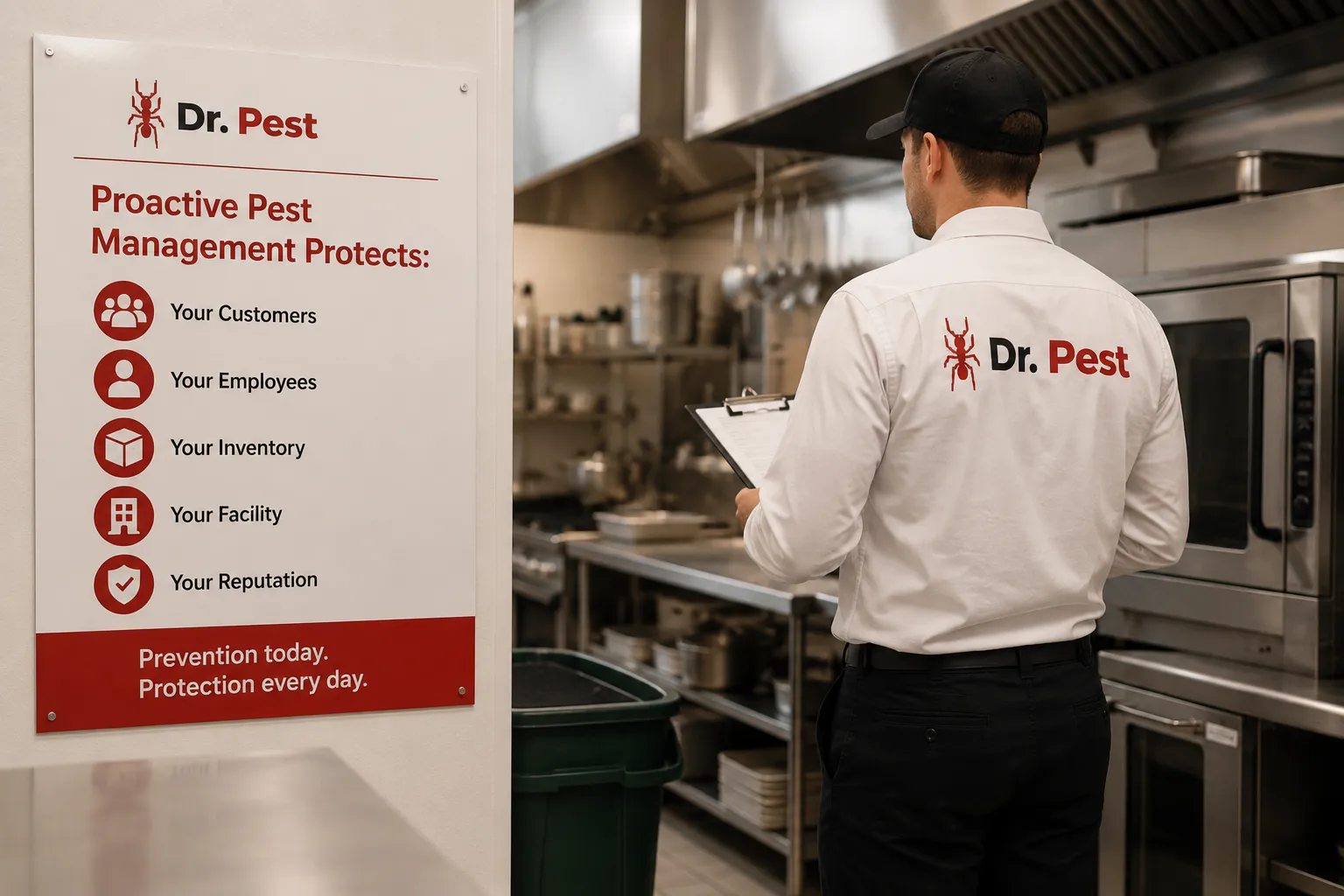
It’s about protecting:
- Your customers
- Your employees
- Your inventory
- Your facility
- Your reputation
According to the United States Environmental Protection Agency, Integrated Pest Management (IPM) emphasizes prevention, monitoring, and reducing conditions that allow pests to thrive.
Learn more:
https://www.epa.gov/safepestcontrol/integrated-pest-management-ipm-principles
1. Damage to Your Reputation
Today’s customers share their experiences almost instantly.
One photo of a cockroach in a restaurant or a rodent in a retail store can quickly spread through:
- Google Reviews
- Yelp
- TikTok
Even if the problem is resolved immediately, negative online reviews can continue influencing potential customers long after the infestation is gone.
Your reputation is one of your most valuable business assets.
Protecting it should always be a priority.

2. Lost Customers and Revenue
Many customers simply don’t return after seeing pests.
Restaurants, medical offices, hotels, apartment communities, warehouses, and retail businesses all rely heavily on customer confidence.
When that trust is lost, recovering it can take months—or even years.
The financial impact often extends far beyond the initial treatment cost.
3. Product and Inventory Loss
Many pests contaminate products rather than simply damaging them.
Businesses may need to discard:
- Food products
- Packaging
- Stored inventory
- Raw materials
- Finished goods
For warehouses, food distributors, manufacturers, and retailers, inventory loss can become one of the largest expenses associated with an infestation.

4. Facility Damage
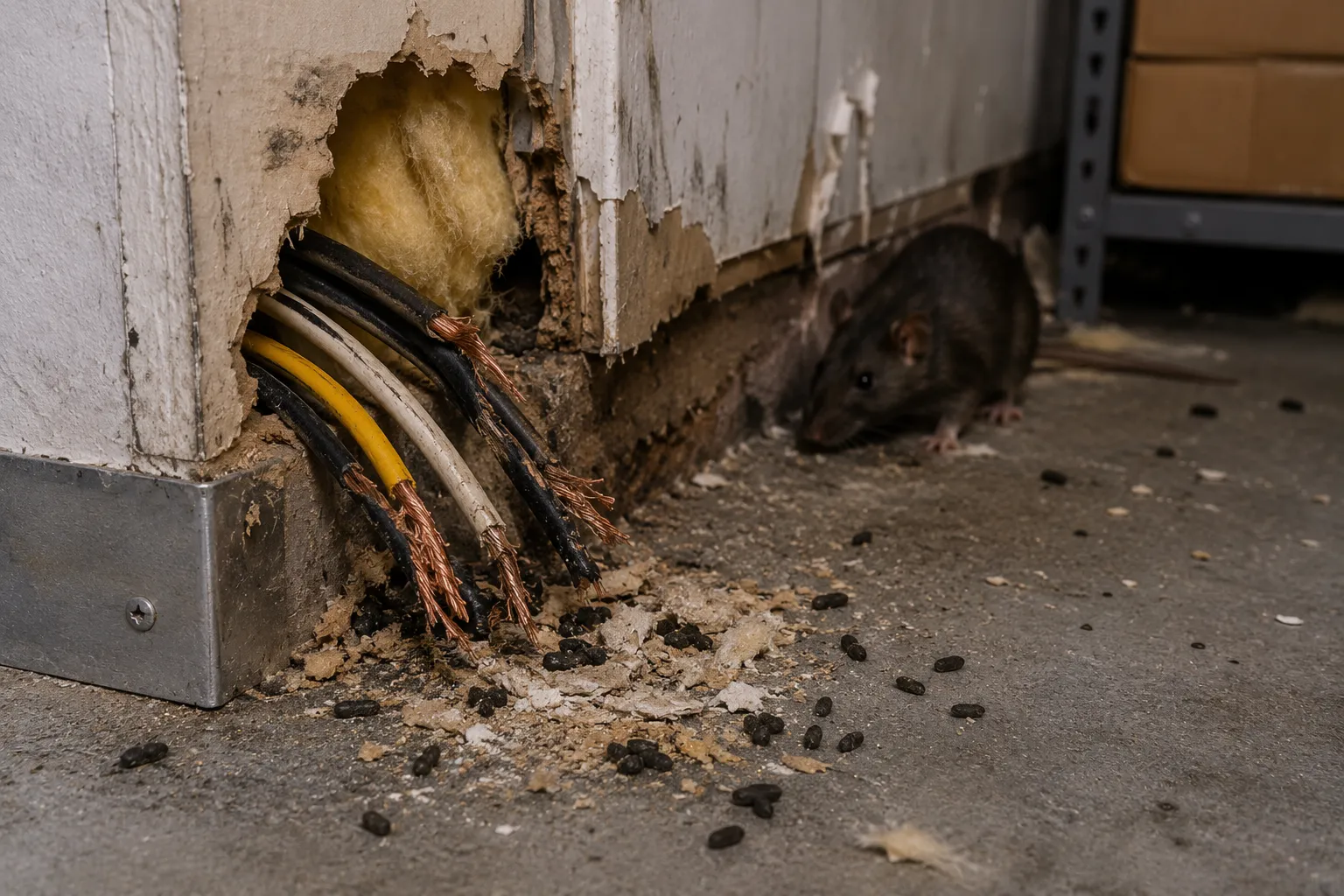
Rodents and insects don’t just occupy buildings.
They damage them.
Examples include:
- Chewed electrical wiring
- Damaged insulation
- Contaminated storage areas
- Structural deterioration
- Damaged packaging materials
The longer pests remain active, the more extensive repairs often become.
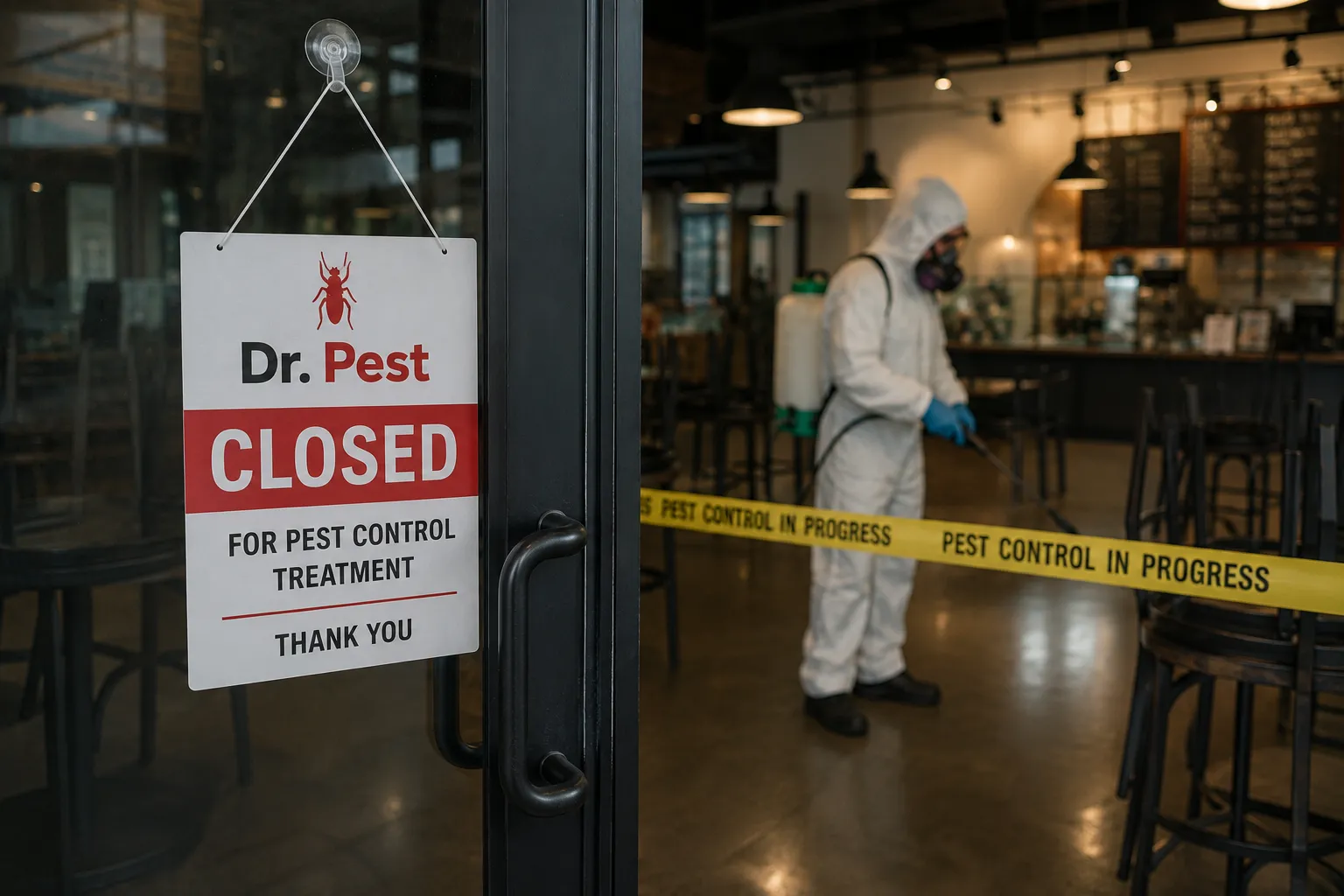
5. Business Interruptions
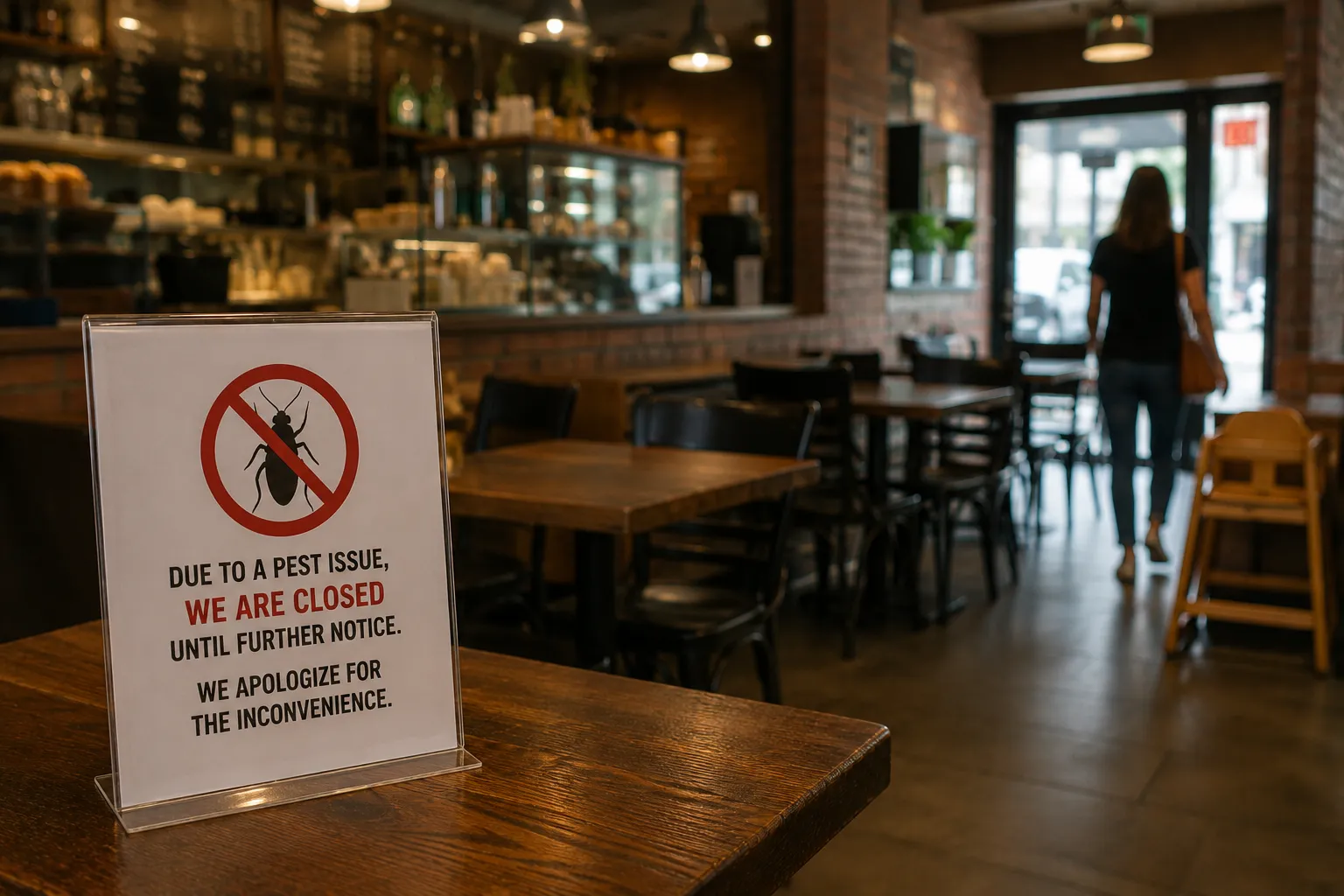
Many businesses cannot continue operating normally during significant pest treatments.
Depending on the situation, owners may need to:
- Close temporarily
- Relocate inventory
- Delay production
- Reschedule appointments
- Restrict customer access
These interruptions often create indirect costs that exceed the price of pest control itself.
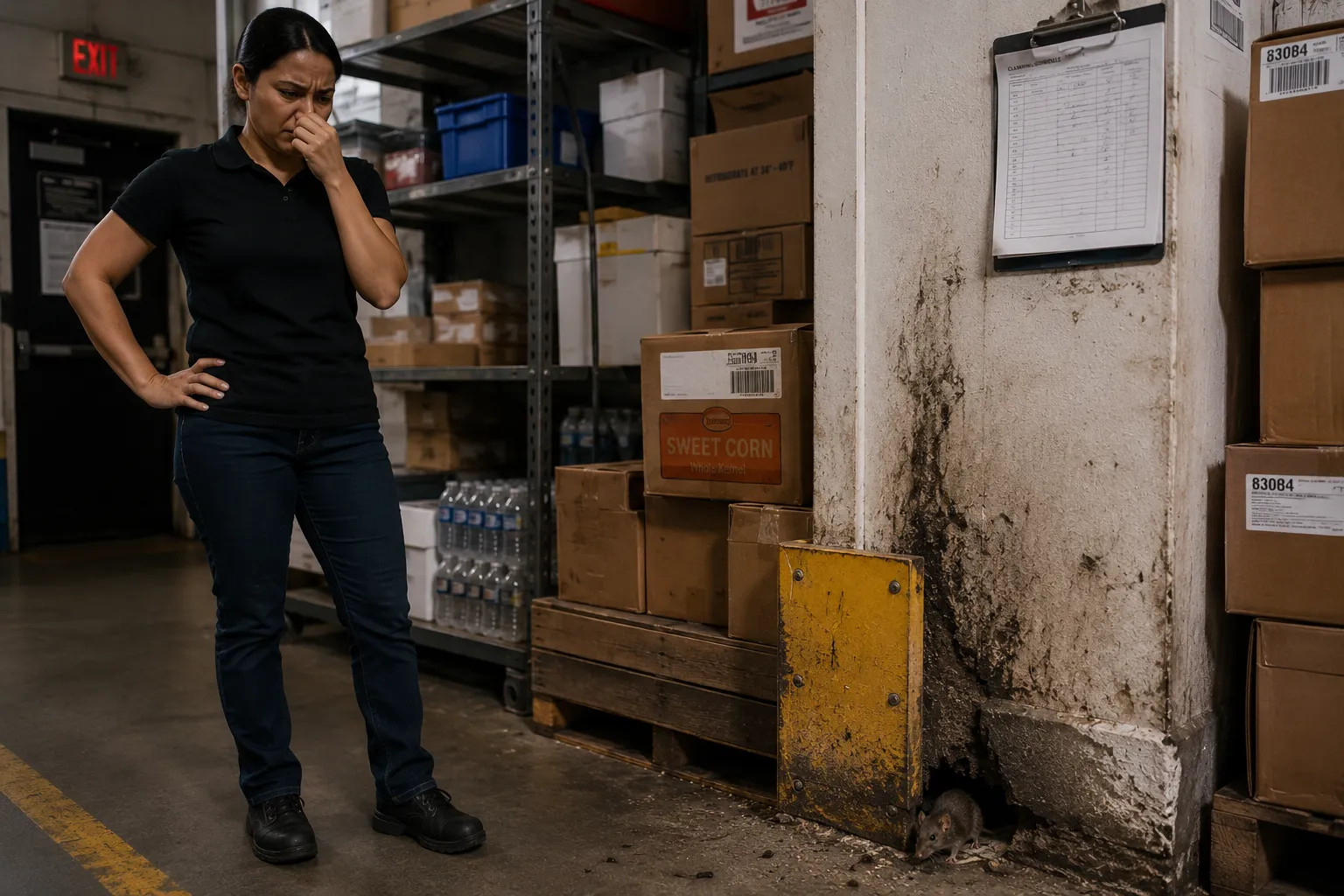
6. Employee Health and Morale
No one enjoys working in an environment where pests are present.
Employees who repeatedly encounter rodents or insects may become concerned about:
- Cleanliness
- Workplace safety
- Food contamination
- Air quality
Maintaining a clean, well-managed facility contributes to employee confidence and productivity.
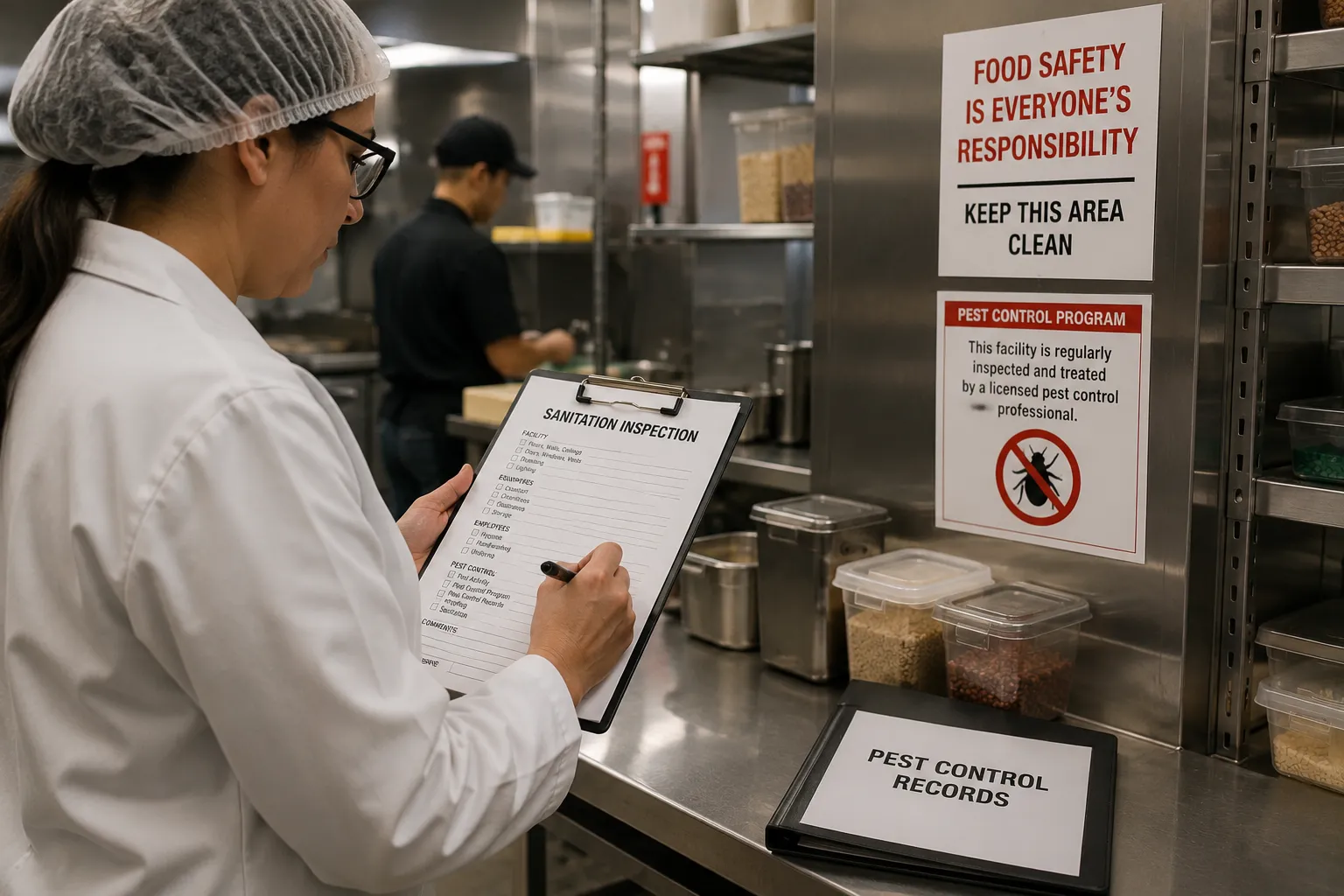
7. Regulatory and Compliance Concerns
Many industries operate under strict sanitation and regulatory standards.
Pest activity can create complications during inspections for businesses such as:
- Restaurants
- Food processors
- Healthcare facilities
- Pharmaceutical companies
Routine pest management helps businesses maintain cleaner, more compliant facilities.
Which Businesses Face the Greatest Risk?
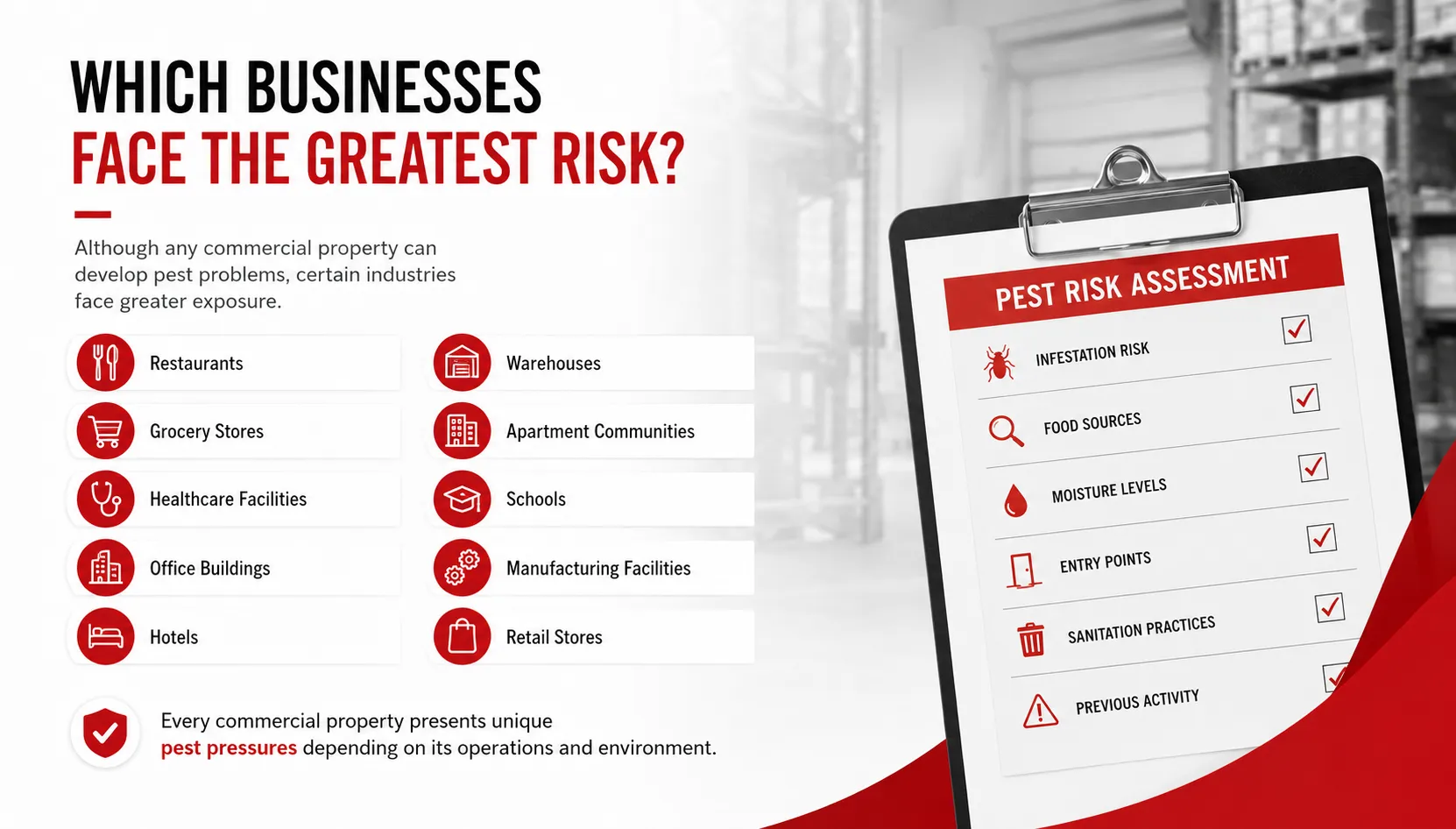
Although any commercial property can develop pest problems, certain industries face greater exposure.
Examples include:
- Restaurants
- Warehouses
- Grocery stores
- Apartment communities
- Healthcare facilities
- Schools
- Office buildings
- Manufacturing facilities
- Hotels
- Retail stores
Every commercial property presents unique pest pressures depending on its operations and environment.
What Can Businesses Do to Reduce Risk?
Prevention starts with consistent facility management.
Helpful practices include:
- Keeping food storage areas clean
- Eliminating standing water
- Managing trash properly
- Sealing entry points
- Maintaining landscaping
- Scheduling regular inspections
These simple steps reduce conditions that attract pests while making it easier to detect developing problems.

Why Ongoing Commercial Pest Management Is an Investment
Some business owners view pest control as an expense.
A better perspective is to view it as risk management.
Routine inspections and preventative treatments help reduce the likelihood of:
- Emergency infestations
- Property damage
- Lost customers
- Regulatory issues
- Costly repairs
For many businesses, ongoing pest management is a small investment that helps protect much larger assets.

Protect Your Business Before Problems Grow
Whether you manage a single office or multiple commercial properties, early detection and routine service can help prevent pest problems from disrupting your operations.
Professional inspections identify conditions that attract pests and allow corrective action before infestations become established.
Learn more about Dr. Pest’s commercial pest management services by visiting:

Conclusion
The true cost of a commercial pest infestation extends well beyond extermination.
Lost customers, damaged inventory, interrupted operations, and reputational harm can have lasting effects on a business.
By investing in preventative commercial pest management, business owners can reduce risk, protect their facilities, and focus on serving customers instead of responding to avoidable emergencies.
FAQ: Commercial Pest Control for Businesses
1. How much can a pest infestation cost a business?
The total cost depends on the severity of the infestation and may include inventory loss, repairs, downtime, and reputational damage.
2. Why is commercial pest prevention important?
Preventing infestations is typically less disruptive and less expensive than responding after pests become established.
3. What industries need commercial pest control?
Restaurants, warehouses, offices, healthcare facilities, apartment communities, retail stores, schools, hotels, and manufacturers all benefit from ongoing pest management.
4. Can pests damage inventory?
Yes. Rodents and insects may contaminate or damage products, packaging, and stored materials.
5. Can pests damage buildings?
Yes. Rodents may chew wiring and insulation, while other pests can damage structural components or stored goods.
6. How do pests affect a company’s reputation?
Customer sightings can result in negative reviews, complaints, and lost business.
7. Why are routine inspections important?
Inspections help identify conditions that attract pests before infestations develop.
8. What is Integrated Pest Management?
IPM is a preventative approach that focuses on monitoring, exclusion, sanitation, and targeted treatments.
9. How often should commercial properties receive pest service?
Service frequency depends on the property type, industry, and pest pressures.
10. Can pests interrupt business operations?
Yes. Significant infestations may require temporary closures, inventory relocation, or treatment downtime.
11. Are warehouses at risk for pests?
Absolutely. Stored products and shipping activity can attract rodents and insects.
12. Why do office buildings need pest control?
Even buildings without food service can experience rodent, ant, cockroach, and spider activity.
13. Can preventative pest control reduce long-term costs?
In many cases, yes. Preventing infestations is generally more cost-effective than correcting major problems.
14. What attracts pests to commercial buildings?
Food, water, shelter, clutter, and unsealed entry points are common attractants.
15. Can pest problems affect employee morale?
Yes. Employees appreciate working in clean, well-maintained facilities.
16. How quickly can infestations spread?
Many pest populations grow rapidly once food and shelter are available.
17. Should businesses wait until they see pests?
No. By the time pests are visible, the infestation may already be well established.
18. Is commercial pest control customized?
Yes. Service plans should be tailored to the property’s operations, industry, and risk factors.
19. Why is ongoing pest management better than one-time treatments?
Routine service focuses on prevention, monitoring, and long-term protection rather than reacting to emergencies.
20. Where can I learn more about commercial pest control?
Visit https://doctorpest.net/ to learn more about protecting your business with proactive pest management.
Leave a Reply