
Wasps can be a significant nuisance and even a danger to households, especially during warmer months. Their aggressive behavior and painful stings make them unwelcome guests in any home or garden. Effective wasp removal is essential for ensuring safety and comfort. This comprehensive guide covers everything you need to know about wasp removal, from understanding wasp behavior to safe and effective removal methods.
Understanding Wasps: Behavior and Risks
Before diving into wasp removal strategies, it’s important to understand the different types of wasps and the risks they pose.
In Long Beach, Seal Beach, Huntington Beach, Torrance or Newport Beach? Dr. Pest works these cities every week. Call (562) 488-7455 for a free inspection and a written quote before any work starts, or see the city we cover nearest you.
Common Types of Wasps
- Paper Wasps: Recognizable by their thin bodies and long legs, they build open, umbrella-shaped nests under eaves and in sheltered areas.
- Yellowjackets: Aggressive and territorial, these wasps build nests in the ground, walls, or trees.
- Hornets: A type of large wasp known for its painful sting and highly defensive nature.
- Mud Daubers: Less aggressive and solitary, they build tube-like nests from mud in sheltered locations.
Why Wasps Are Dangerous
- Allergic Reactions: Wasp stings can cause severe allergic reactions in some people, leading to anaphylaxis.
- Multiple Stings: Unlike bees, wasps can sting multiple times, increasing the risk of injury.
- Aggressive Behavior: Wasps are highly defensive when their nests are disturbed.
- Property Damage: Certain wasp species can cause structural damage when they build nests inside walls or attics.
Identifying a Wasp Infestation
Recognizing the signs of a wasp infestation early can prevent potential harm.
Signs of Wasp Activity
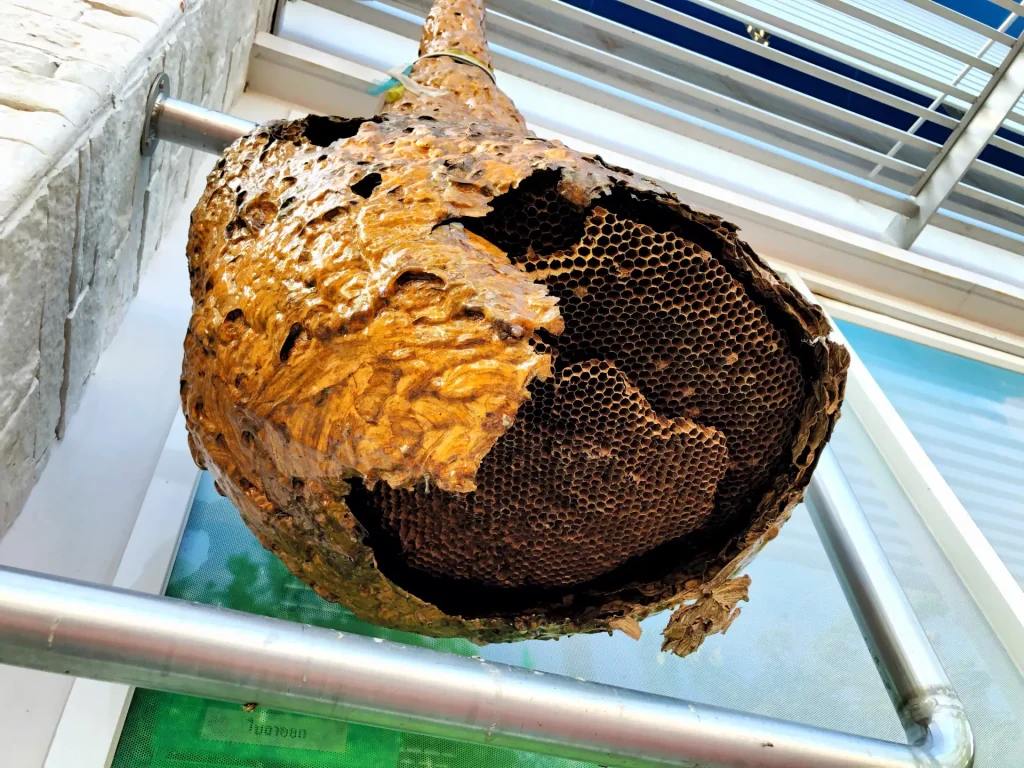
- Visible Nests: Spotting nests in trees, under eaves, or in the ground.
- Increased Wasp Sightings: A higher number of wasps around your home or garden.
- Buzzing Sounds: Hearing buzzing noises in walls or ceilings can indicate hidden nests.
- Chewed Wood: Paper wasps often chew wood fibers to build nests, leaving noticeable damage.
Common Nesting Areas
- Roof eaves and overhangs
- Attics and wall voids
- Trees, shrubs, and garden sheds
- Underground burrows (especially for yellowjackets)
- Garage rafters and outdoor furniture
DIY Wasp Removal Methods
For small nests or early infestations, DIY methods can be effective for wasp removal.
Using Wasp Sprays
- Commercial Sprays: Apply directly to the nest during evening hours when wasps are less active.
- Foam Sprays: Designed to engulf and suffocate wasps within the nest.
- Residual Sprays: Leave a chemical barrier that prevents wasps from returning.
Homemade Wasp Traps
- Sugar Water Traps: Use sugar water in a bottle to attract and trap wasps.
- Meat Bait Traps: Raw meat can lure predatory wasps, trapping them in sealed containers.
- DIY Bottle Trap: Cut a plastic bottle in half, invert the top into the bottom, and fill with bait.
Sealing Entry Points
- Identify and seal cracks or holes in walls, roofs, and foundations to prevent wasps from entering.
- Install door sweeps and window screens to block access points.
Natural Wasp Removal Solutions
For those seeking eco-friendly methods, natural wasp removal solutions can be effective.
Essential Oils
- Peppermint Oil: A natural wasp repellent when mixed with water and sprayed around nesting areas.
- Clove, Geranium, and Lemongrass Oils: A blend of these oils deters wasps from nesting.
Vinegar and Soap Solution
- Mix vinegar and dish soap in a spray bottle to kill wasps on contact.
- Spray directly on wasps and their nests for immediate results.
Planting Wasp-Repelling Plants
- Mint, Eucalyptus, and Wormwood: These plants naturally repel wasps.
- Citronella and Marigolds: Known to deter various pests, including wasps.
Professional Wasp Removal Services
Severe infestations or difficult-to-reach nests often require professional intervention.
Benefits of Hiring a Professional
- Expert Assessment: Identifying the type of wasp and the best removal strategy.
- Safety Equipment: Professionals use protective gear and tools to remove nests safely.
- Long-Term Solutions: Preventative measures to reduce future infestations.
- Time and Cost Efficiency: Professionals can eliminate wasps quickly, saving time and reducing the need for repeated DIY efforts.
When to Call a Professional
- Large Nests: DIY methods are risky for large or hidden nests.
- Indoor Infestations: Wasps inside walls or attics require specialized removal.
- Recurring Problems: Repeated infestations signal the need for expert help.
- Presence of Allergies: If household members are allergic to wasp stings, professional removal is safer.
Preventing Future Wasp Infestations
Prevention is key to long-term wasp control.
Regular Inspections
- Check for early signs of nest-building in spring and early summer.
- Inspect common nesting areas frequently.
Sealing Potential Nesting Sites
- Repair cracks in walls and roofs.
- Install mesh over vents and chimneys.
- Use caulk to seal gaps in siding and around windows.
Removing Attractants
- Cover garbage bins tightly.
- Clean up food and drink spills outdoors.
- Harvest ripe fruit from trees and gardens promptly.
- Keep compost bins securely closed.
Understanding Wasp Life Cycles for Better Control
Knowing the life cycle of wasps can help prevent and manage infestations more effectively.
Wasp Life Cycle Stages
- Queen Emergence: In early spring, the queen emerges from hibernation to start a new colony.
- Nest Building: The queen builds a small nest and begins laying eggs.
- Worker Wasps: Eggs hatch into workers that expand the nest and protect the colony.
- Reproductive Phase: Late summer sees the production of new queens and male wasps.
- Colony Decline: The colony dies off in fall, leaving new queens to hibernate.

Dealing with Wasps During Outdoor Activities
Wasps can be a significant nuisance during outdoor events. Here are ways to stay safe:
Wasp Safety Tips for Outdoor Gatherings
- Food and Drink: Keep food covered and drinks in closed containers.
- Avoid Bright Colors: Wear neutral-colored clothing to avoid attracting wasps.
- Use Natural Repellents: Set up citronella candles or essential oil diffusers.
- Waste Management: Dispose of trash promptly in sealed bins.
Call Dr. Pest for Expert Wasp Removal Services
Wasps can pose serious risks to your family and property, but you don’t have to face them alone. Dr. Pest offers professional, safe, and effective wasp removal services tailored to your specific needs. Our experienced team uses eco-friendly and humane methods to eliminate wasps and prevent future infestations.
Don’t let wasps take over your space—contact Dr. Pest today for a free consultation and reclaim your home and garden!
Leave a Reply