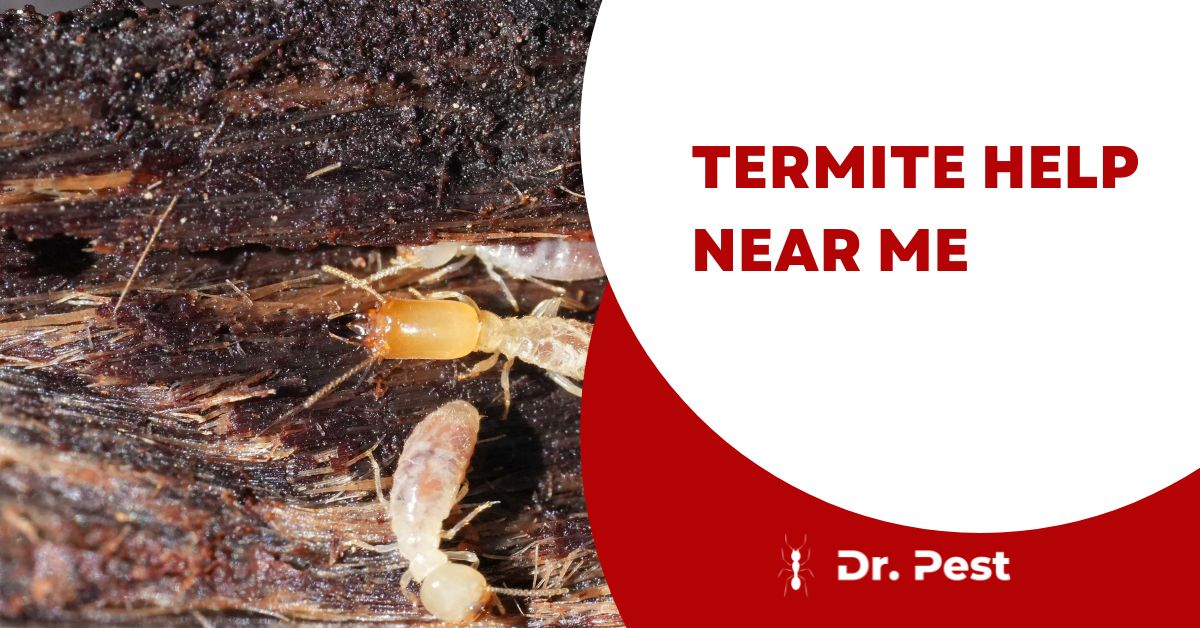
The first good rain of the fall comes through, the sun comes back out, and that afternoon there are dozens of small winged insects on the patio, the windowsill or the inside of a sliding door. A day later there is a little pile of wings and the insects are gone. In Long Beach, Seal Beach and Huntington Beach, that is often a termite swarm.
Swarming is how a termite colony sends out new kings and queens to start new colonies. It is also one of the few times you will ever see a termite, because the rest of the colony stays hidden in the soil or inside the wood. So a swarm is worth paying attention to, but it is not a reason to panic.
Here is what a fall swarm usually means, what to do in the first day, and when to call for an inspection.
In Long Beach, Seal Beach, Huntington Beach or Torrance? Dr. Pest works these cities every week. Call (562) 488-7455 for a free termite inspection and a written quote before any work starts, or see how our termite control works.
Two kinds of termite, two kinds of swarm
Subterranean termites live in the soil and come up into the house through mud tubes. According to the University of California’s pest management program, the common native species swarm in the afternoon in spring or fall, on clear days after a soaking rain. That is why so many fall swarms show up the day after the first real storm of the season. The swarmers are dark brown to nearly black.
Drywood termites never touch the soil. They live inside the wood itself, in eaves, fascia, window frames and attic framing, and they swarm during the day in summer and fall. The usual sign before or after a swarm is a small pile of tiny, hard pellets under a sill or along a baseboard. Our drywood termite guide has a side-by-side table for telling drywood swarmers from flying ants.
Inside or outside? It matters
Swarmers in the yard do not automatically mean your house has termites. Most soil has buried wood in it, like old roots, stumps and fence posts, and a colony can live in that without ever touching the house. It does mean termites are active close by, so it is a good reason to get the house looked at.
Swarmers inside the house are a different story. If they are coming out of a wall, a baseboard, a window frame or up through the floor, the colony is very likely in or under the structure.
What to do in the first day
- Save a few. Put some swarmers or wings in a zip bag or a piece of tape. It makes identification quick and certain.
- Take photos of where they came from. A crack in the slab, a gap at a window, a baseboard, a vent. Swarmers fly a short distance, so the exit point tells us a lot.
- Do not spray the spot. Killing the swarmers does nothing to the colony, and it can hide the exit point we need to find.
- Look for the other signs. Mud tubes on the foundation or on the piers in a crawlspace, pellets under a sill, or wood that sounds hollow when tapped.
Where we find them in the beach cities
Long Beach. Older neighborhoods with raised foundations, where subterranean termites run mud tubes up the piers in the crawlspace, and decades-old eaves and trim where drywood termites live. See our Long Beach pest control page.
Seal Beach. The Old Town cottages on raised foundations, where the crawlspace is the first place we look, and the slab tracts inland of Seal Beach Boulevard, where termites come in where the slab meets the wall. See our Seal Beach pest control page.
Huntington Beach. The older houses Downtown and the sixties and seventies homes in Huntington Harbour for drywood termites, and the post-war slab tracts inland of Beach Boulevard for subterranean ones. See our Huntington Beach pest control page.
Torrance. Old Torrance crawlspaces for subterranean termites, and drywood termites on the slab tracts in Walteria, Southwood and West Torrance. See our Torrance pest control page.
What happens at the inspection
The inspection is free. We tell you which termite it is, how far it has gone and what treatment fits, and you get the findings and the quote in writing before any work starts. If the swarm turns out to be flying ants, we will tell you that too.
Even without a swarm, a yearly look is worth it on an older house. Here is why we recommend an inspection every year.
Questions people ask
The swarm stopped. Is the problem gone?
No. The swarm lasts a day or two, but the colony that produced it is still there and still feeding.
Are swarming termites dangerous?
They do not bite or sting, and they do not damage anything themselves. The damage comes from the colony they came out of.
How fast can you come out?
Same-day service is available on weekdays for most calls. Call (562) 488-7455.
Seeing winged termites in Long Beach, Seal Beach, Huntington Beach or Torrance? Call Dr. Pest at (562) 488-7455 for a free termite inspection and a written quote before any work starts.
Sources for termite biology: University of California Statewide IPM Program, Pest Notes: Subterranean and Other Termites and Pest Notes: Drywood Termites.
Leave a Reply