
Introduction
When summer begins winding down in Southern California, homeowners often assume pest season is winding down with it.
The ants may not seem quite as aggressive. Flying insects become less noticeable. The backyard doesn’t feel like it’s buzzing with quite as much activity.
So it can be tempting to stop thinking about pest control until next spring.
In Long Beach, Seal Beach, Huntington Beach, Torrance or Newport Beach? Dr. Pest works these cities every week. Call (562) 488-7455 for a free inspection and a written quote before any work starts, or see the city we cover nearest you.
Unfortunately, the pests haven’t necessarily disappeared.
They may simply be changing where they live.
As temperatures begin to cool and seasonal conditions change, homes, garages, attics, crawl spaces, warehouses, restaurants, and other buildings can provide exactly what pests need: food, water, warmth, and protected shelter.
That makes late summer and early fall an important time for pest prevention.
Instead of waiting until you hear scratching in the attic or discover cockroaches in the garage, you can use the weeks before cooler weather arrives to make your property much less inviting.
What You’ll Learn
- Why pest behavior changes as Southern California temperatures cool
- Which pests may become indoor problems during fall and winter
- Why late-summer pest prevention matters
- How rodents find their way into homes and businesses
- How exterior maintenance can reduce winter pest problems
- Why year-round pest management can be more effective than waiting for an infestation

Southern California Doesn’t Really Have an “Off-Season” for Pests
Southern California winters are very different from winters in colder parts of the country.
We generally don’t experience prolonged freezing temperatures capable of dramatically reducing pest activity.
Instead, pest pressure changes throughout the year.
During hot summer months, pests may be highly active outdoors because food and breeding conditions are abundant. As temperatures cool, protected areas around and inside structures can become increasingly attractive.
That can include:
- Attics
- Garages
- Crawl spaces
- Wall voids
- Storage areas
- Warehouses
- Utility rooms
- Kitchens
The objective of fall pest prevention is to make it harder for pests to find their way into those spaces in the first place.

1. Rodents: The Winter Pest You Definitely Don’t Want Moving In
Rodents are one of the biggest reasons to think about pest prevention before temperatures drop.
Rats and mice are constantly searching for three things:
Food. Water. Shelter.
Your home can provide all three.
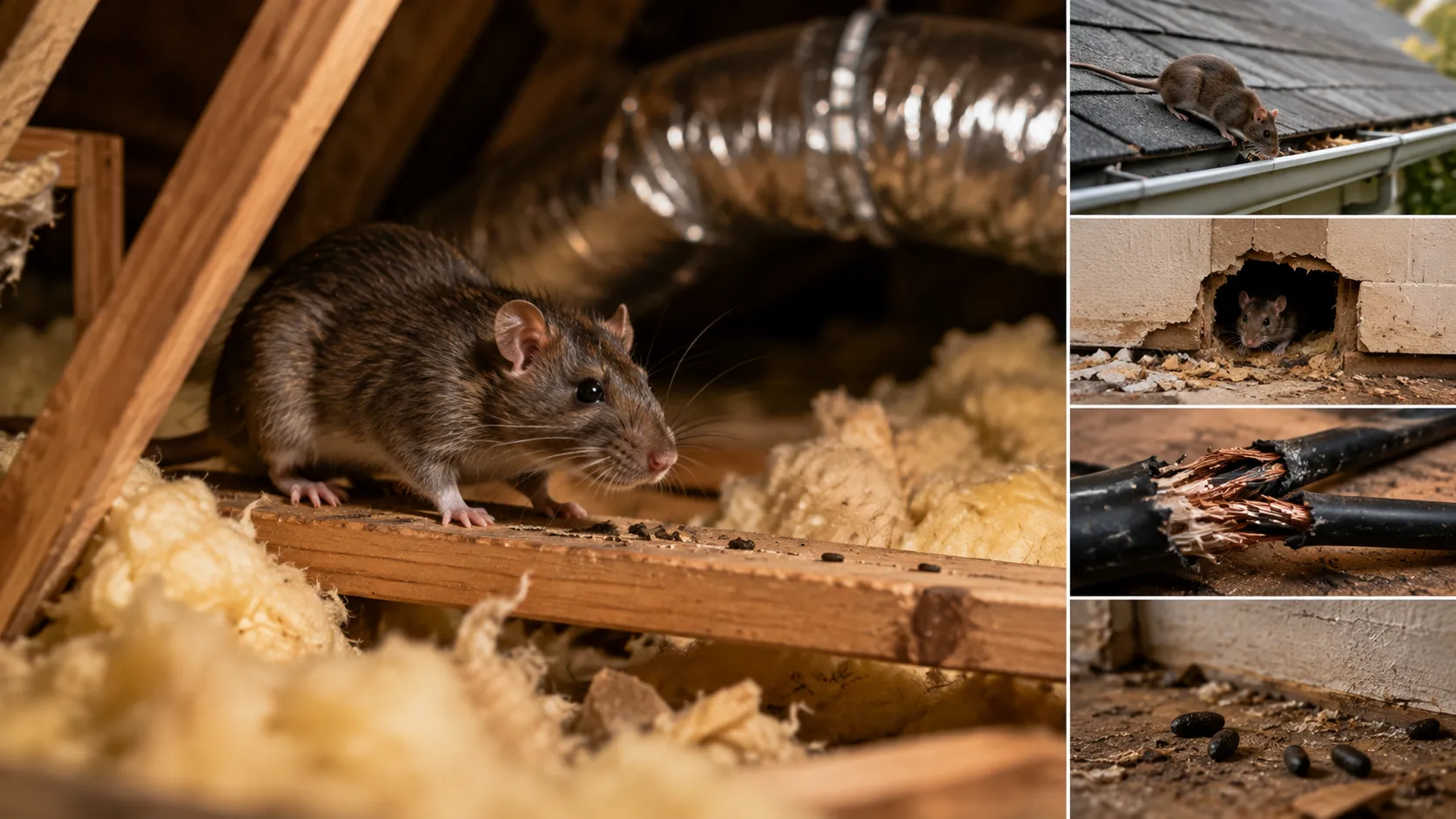
Roof rats may travel across trees, fences, utility lines, and rooftops looking for access to protected nesting locations.
Mice can enter through surprisingly small openings around a structure.
Once inside, rodents may nest in:
- Attics
- Garages
- Wall cavities
- Storage areas
- Crawl spaces
And they aren’t simply annoying roommates.
Rodents can contaminate food and stored materials and damage insulation, containers, and other building materials. Their gnawing behavior can also damage electrical wiring.
Summer Is a Great Time to Prevent a Winter Rodent Problem
Don’t wait until you hear something moving above your ceiling.
Before cooler weather arrives, inspect your property for potential entry points.
Look around:
- Roof vents
- Garage doors
- Exterior doors
- Utility penetrations
- Attic vents
- Rooflines
- Plumbing penetrations
- Gaps around exterior construction
Exclusion—physically preventing rodents from entering—is one of the most important components of long-term rodent control.
2. Cockroaches: Warmth and Moisture Make Your Home Attractive
Cockroaches don’t need a calendar to tell them winter has arrived.
They need suitable conditions.
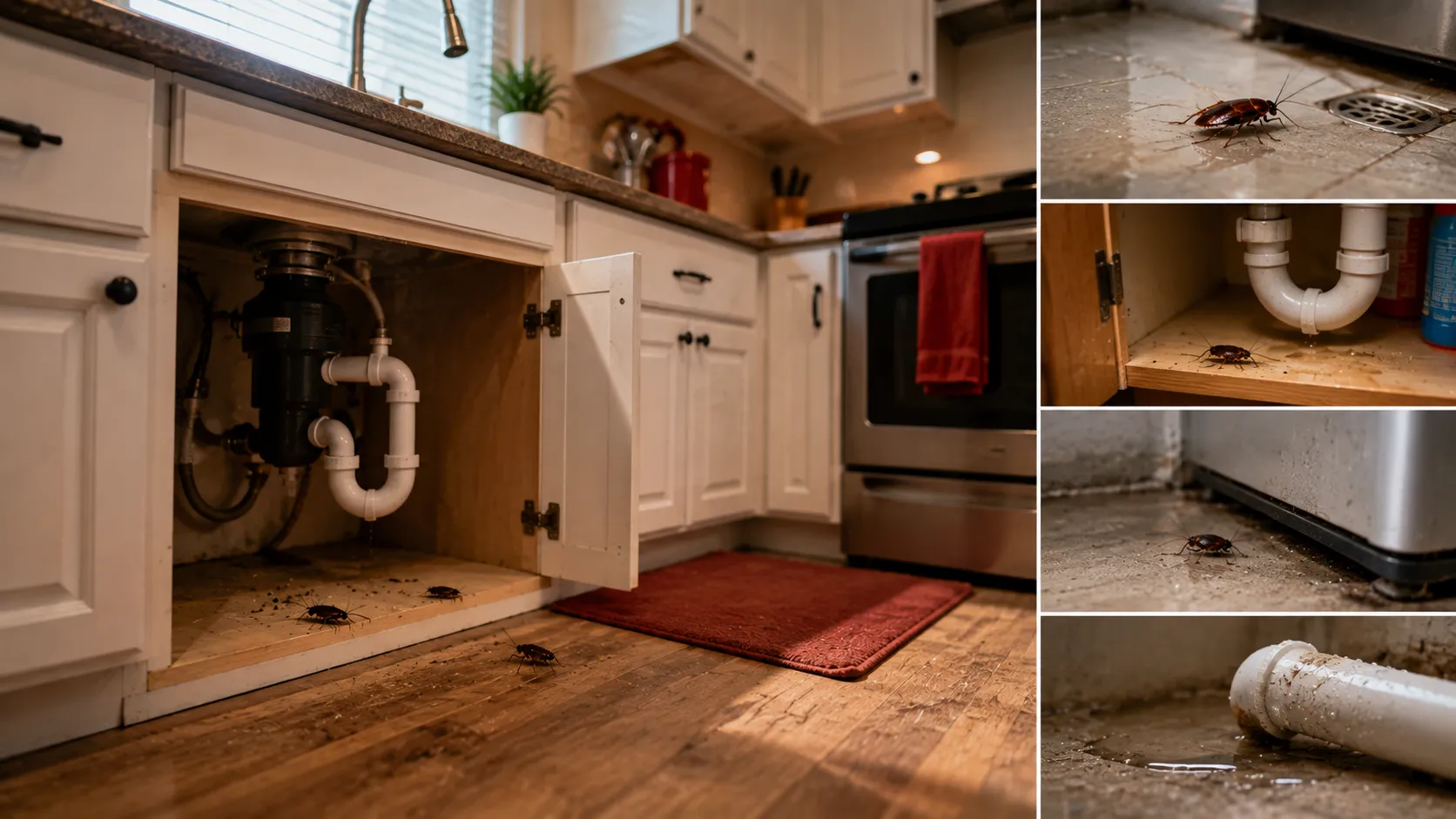
Warm, protected areas with access to moisture and food can support cockroach activity even when outdoor conditions become less favorable.
Common problem areas include:
- Kitchens
- Bathrooms
- Laundry rooms
- Garages
- Utility areas
- Under sinks
- Around appliances
Late summer is an excellent time to inspect these areas and address moisture problems.
Pay Particular Attention to Water
A tiny plumbing leak may not seem significant to a homeowner.
To a pest looking for water, it can be an excellent resource.
Check for:
- Leaking faucets
- Plumbing leaks
- Irrigation leaks
- Standing water
- Condensation
- Poor drainage
Reducing unnecessary moisture makes your property less attractive to many different pests.
3. Ants: Summer Activity Can Become an Indoor Problem
Anyone who has lived in Southern California knows how persistent ants can be.
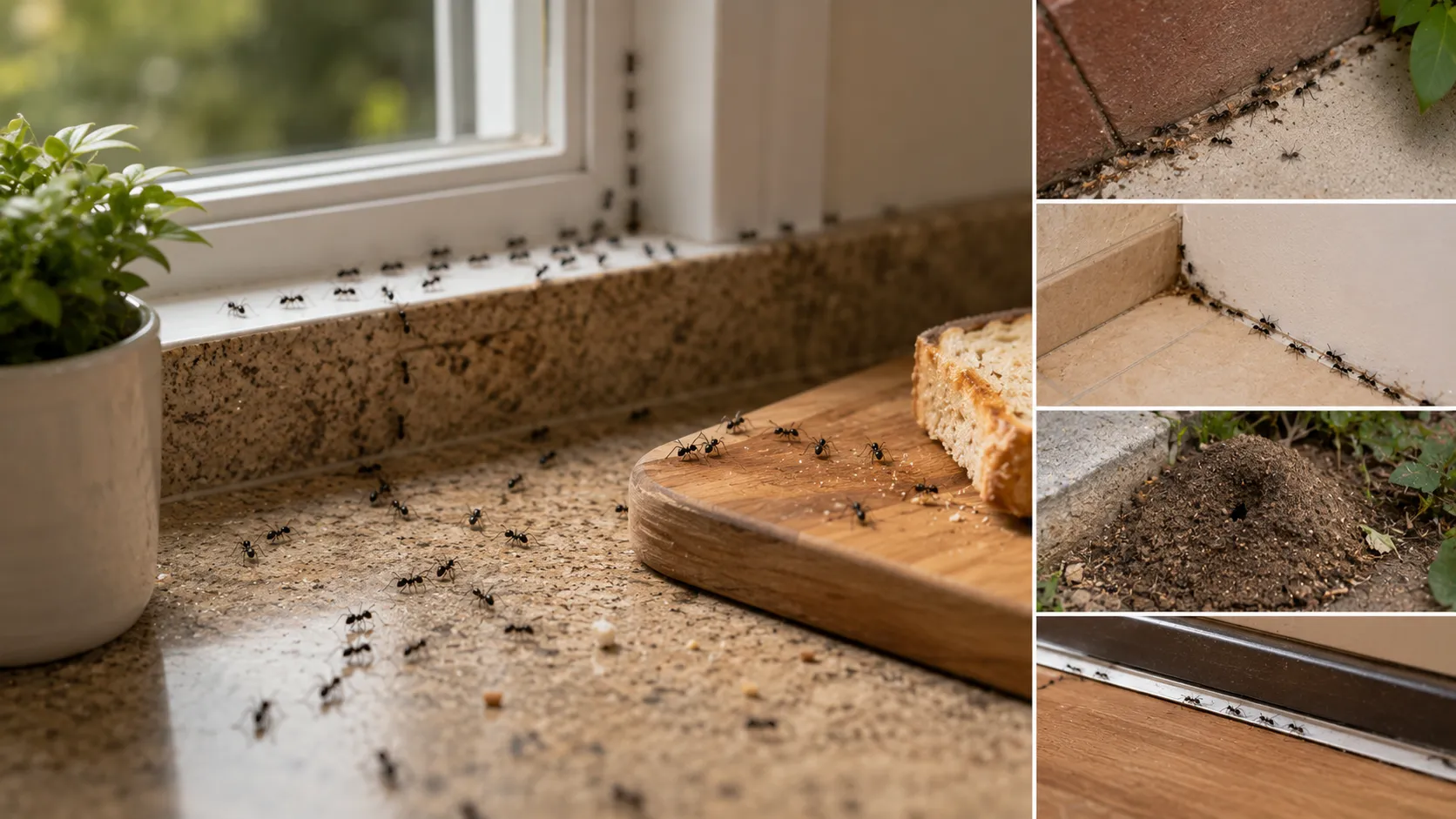
During hot, dry periods, ants frequently enter structures looking for water and food.
While their activity may change as seasons transition, colonies don’t necessarily disappear simply because summer ends.
If ants have already established reliable routes into your home, those pathways can continue creating problems.
Late summer provides an opportunity to identify:
- Ant trails
- Exterior colonies
- Food sources
- Moisture sources
- Entry points
Simply eliminating the ants you see doesn’t always address the larger colony or the conditions attracting them.
4. Spiders: Sometimes They’re Following Their Food
Seeing more spiders doesn’t necessarily mean you have a “spider problem.”
It may mean you have an insect problem.
Spiders go where their food is.
Exterior lights, garages, landscaping, patios, and other areas that attract insects can consequently attract spiders.
Rather than focusing exclusively on removing webs, look at why insects are gathering there in the first place.
Reducing the food supply can naturally make the area less attractive to spiders.

5. Garages and Storage Areas Become Perfect Pest Shelters
The garage tends to become the forgotten room of the house.
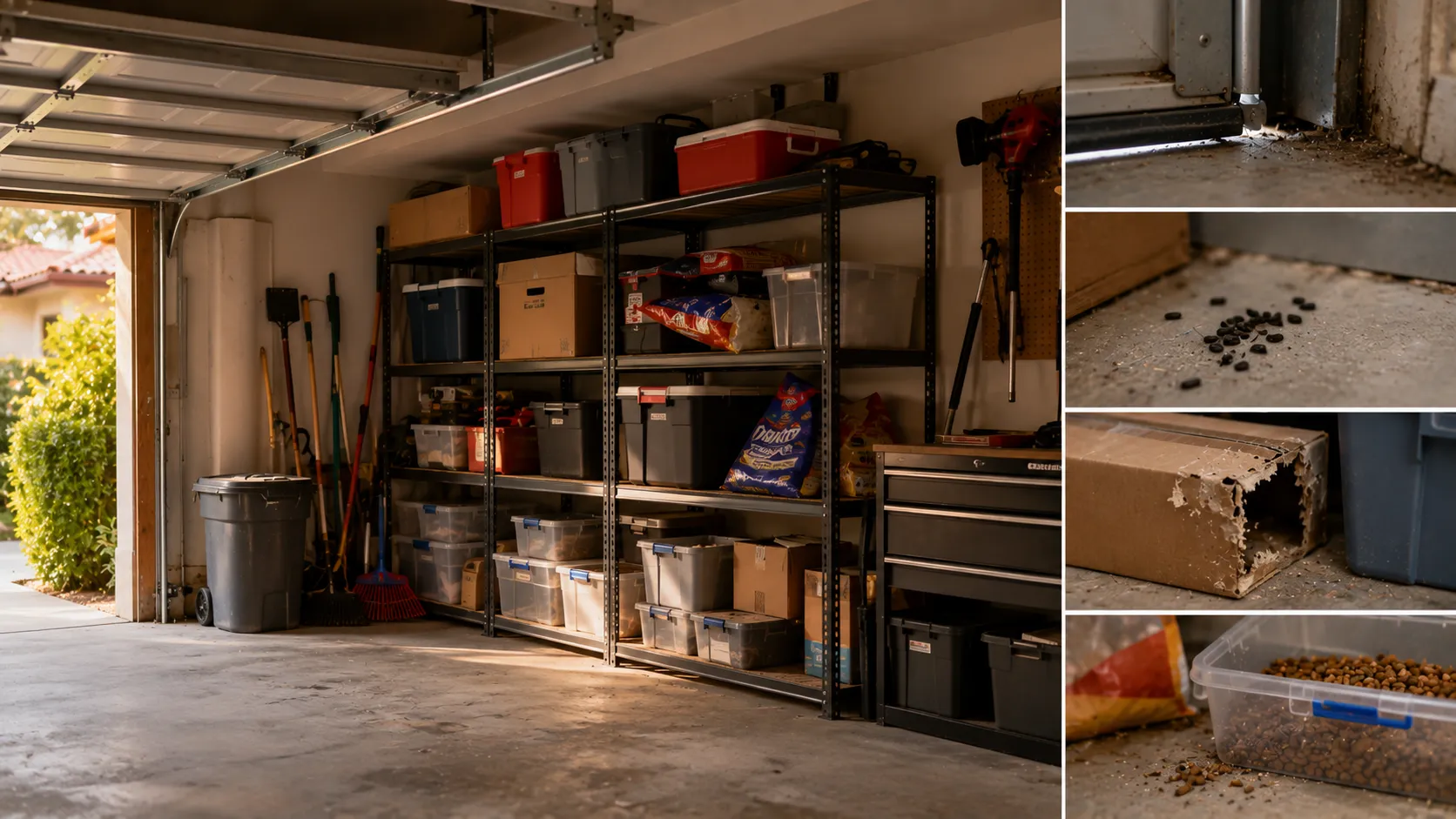
Cardboard boxes pile up.
Holiday decorations get stored.
Pet food sits in bags.
Items remain untouched for months.
Unfortunately, those conditions can create excellent hiding and nesting opportunities.
Before fall arrives, consider doing a quick garage cleanup.
Look for:
- Open food containers
- Pet food
- Cardboard clutter
- Evidence of droppings
- Gnaw marks
- Gaps around the garage door
- Water leaks
- Damaged weather stripping
Whenever possible, store important items in sealed containers rather than cardboard boxes.
6. Landscaping Can Create a Highway to Your House
Beautiful landscaping can unintentionally make pest access easier.
Tree branches touching the roof may provide travel routes for rodents.
Dense shrubs against exterior walls create protected areas for insects.
Heavy irrigation provides moisture.
Ground cover can provide shelter.
You don’t need to eliminate your landscaping.
You simply want to create separation between vegetation and the structure.
Before cooler weather arrives:
- Trim branches away from the roof
- Cut vegetation back from exterior walls
- Remove unnecessary debris
- Address irrigation leaks
- Eliminate standing water
- Keep exterior storage organized
Think of it as creating a buffer around your home.

7. Seal the Small Openings Before Pests Find Them
A house can look completely sealed to you while still offering dozens of potential pest entrances.
Look closely around:
- Pipes
- Cables
- Doors
- Windows
- Vents
- Rooflines
- Foundations
- Utility connections
Weather stripping should also fit tightly around exterior doors.
Pest exclusion is particularly important because it addresses the problem without relying solely on treatments.
You’re removing the pests’ ability to enter.

Why Late Summer Is Such a Good Time for Pest Prevention
There’s a simple advantage to dealing with pest problems now:
You have time.
Waiting until a pest has established itself inside your property turns prevention into treatment.
By addressing potential problems during late summer and early fall, homeowners can:
- Seal entry points
- Reduce outdoor pest populations
- Correct moisture issues
- Remove nesting opportunities
- Clean storage areas
- Improve landscaping
- Monitor developing activity
You’re preparing your home before pests begin looking for better shelter.

Integrated Pest Management: Treat the Cause, Not Just the Pest
Effective long-term pest control isn’t simply about spraying whenever an insect appears.
The United States Environmental Protection Agency describes Integrated Pest Management (IPM) as an environmentally sensitive approach that uses information about pest life cycles and their interaction with the environment, combining available pest-control methods while managing risk.
For homeowners, that means thinking beyond the pest you can see.
Ask:
Why is it here?
Does it have food?
Does it have water?
Where is it hiding?
How did it get inside?
What could prevent it from returning?
Answering those questions can be much more valuable than simply eliminating the individual pest you found.

Businesses Should Prepare for Cooler Weather Too
Seasonal pest prevention isn’t limited to homes.
Commercial properties can provide even more opportunities for pests because they may have:
- Loading docks
- Frequent deliveries
- Large storage areas
- Employee break rooms
- Commercial kitchens
- Trash enclosures
- Landscaping
- Utility rooms
Restaurants, warehouses, offices, retail centers, apartment communities, and industrial facilities should all consider seasonal pest risks.
For businesses, prevention is particularly important because a pest problem can affect more than the building itself.
It can affect employees, customers, operations, inventory, inspections, and reputation.

Why Year-Round Pest Control Makes Sense in Southern California
The biggest takeaway is simple:
Pest season doesn’t suddenly end when summer does.
The problems change.
During one part of the year, you may be fighting ants outdoors.
A few months later, you could be preventing rodents from entering the attic.
The goal of year-round pest management is to respond to those changing pressures before they become infestations.
A professional inspection can help identify:
- Existing pest activity
- Potential rodent entry points
- Moisture problems
- Landscaping concerns
- Nesting locations
- Conditions that could attract pests later
That allows pest management to become preventative rather than reactive.

Preparing Your Southern California Home for Fall and Winter
Before cooler temperatures arrive, walk around your property and look at it from a pest’s perspective.
Where could you get inside?
Where could you find water?
Where could you hide?
Where could you find food?
You may be surprised by what you notice.
Taking care of those vulnerabilities now can help reduce the likelihood of discovering unwanted visitors later.
For professional residential and commercial pest control throughout Southern California, learn more about Dr. Pest at:
doctorpest.net

Conclusion
When summer pest activity begins slowing down, don’t assume your pest problems are over.
For many pests, changing weather simply changes their behavior.
Rodents may seek protected nesting areas. Cockroaches can take advantage of warm, moist indoor environments. Ants may continue following established pathways, while spiders follow other insects wherever they go.
That’s why late summer and early fall are valuable times for prevention.
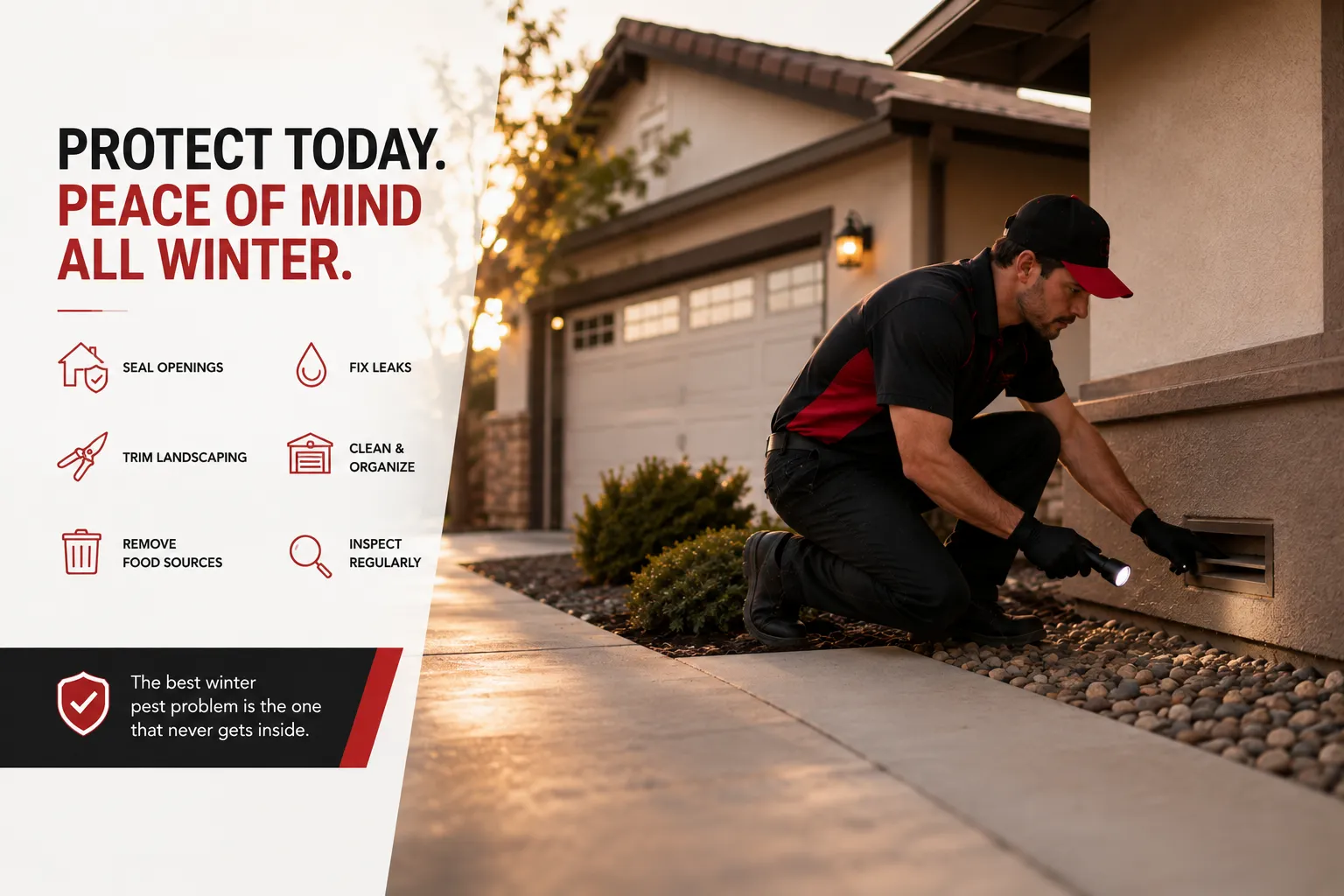
Seal the openings. Fix the leaks. Trim the landscaping. Clean the garage. Remove food sources. Inspect the property.
The best winter pest problem is the one that never gets inside.
FAQ: Fall and Winter Pest Control in Southern California
1. Do pests disappear during winter in Southern California?
No. Southern California’s relatively mild winters allow many pests to remain active. Their behavior and preferred locations may change as temperatures cool.
2. What pests should homeowners watch for during cooler weather?
Rodents, cockroaches, ants, spiders, and other insects can continue creating problems during fall and winter.
3. Why do rodents enter homes when temperatures drop?
Homes provide reliable access to shelter, food, water, and protected nesting locations.
4. Where do roof rats commonly enter homes?
Potential access points include roof vents, damaged screening, gaps around rooflines, utility penetrations, and areas accessible from nearby vegetation.
5. Can mice really fit through small openings?
Yes. Mice can use remarkably small gaps, which is why careful exterior inspection and exclusion are important.
6. Why should I trim trees away from my roof?
Branches can provide rodents and other pests with easier access to the roof and potential entry points.
7. Do cockroaches remain active during winter?
They can. Indoor environments may provide the warmth, moisture, food, and shelter they need throughout the year.
8. Why are plumbing leaks a pest concern?
Reliable moisture can attract and support cockroaches, ants, rodents, and other pests.
9. Will ants disappear when summer ends?
Not necessarily. Ant activity may change with weather conditions, but established colonies can remain active.
10. Why am I finding spiders in my garage?
Garages can attract insects, which provide food for spiders. Reducing the underlying insect population may help reduce spider activity.
11. Does cardboard attract pests?
Cardboard boxes provide protected hiding areas and can contribute to clutter that makes pest activity harder to detect.
12. Should pet food be stored in sealed containers?
Yes. Accessible pet food can become a reliable food source for rodents and insects.
13. What is pest exclusion?
Exclusion means physically sealing or correcting potential entry points to prevent pests from entering a structure.
14. When should I prepare my home for winter pests?
Late summer and early fall are excellent times to inspect the property and correct vulnerabilities before cooler conditions arrive.
15. Does landscaping affect pest activity?
Yes. Dense vegetation, tree branches, debris, standing water, and excessive irrigation can create shelter, moisture, or access routes.
16. What is Integrated Pest Management?
Integrated Pest Management combines monitoring, prevention, exclusion, sanitation, and appropriate control methods rather than relying on a single treatment approach.
17. Do businesses need seasonal pest prevention?
Yes. Restaurants, warehouses, offices, retail centers, apartment communities, and other commercial properties can experience changing pest pressures throughout the year.
18. Why shouldn’t I wait until I see pests?
Many pests remain hidden. By the time activity becomes obvious, a larger population may already be established.
19. Is year-round pest control useful in Southern California?
It can be. Because Southern California has relatively mild seasons, pest pressure doesn’t disappear—it changes throughout the year.
20. How can Dr. Pest help prepare my property for cooler weather?
A professional pest inspection can identify existing activity, entry points, moisture problems, nesting opportunities, and other conditions that may contribute to future infestations. Visit doctorpest.net to learn more about Dr. Pest’s residential and commercial pest control services.
Leave a Reply