
Main Takeaways:
- Fumigation and fogging are not the same — fumigation uses toxic gas to penetrate deep into structures, while fogging uses mist to kill exposed pests.
- Fumigation is best for severe, hidden infestations like termites, bed bugs, and stored-product insects.
- Fogging is ideal for flying and surface pests such as mosquitoes, flies, and fleas, providing fast but temporary results.
- Fumigation requires sealing the structure and vacating the property, while fogging involves less downtime and is generally safer.
- Fumigation offers long-lasting results, whereas fogging may require repeated treatments.
- Costs differ — fumigation is more expensive up front, fogging is more affordable but may add up over time.
- Choosing the right method depends on pest type, infestation severity, safety needs, and property use — professional assessment ensures the best outcome.
Pests are not only an inconvenience, they can damage property, spread disease, and make living or working conditions uncomfortable. When infestations grow beyond what sprays or traps can handle, professional pest control methods become necessary. Two of the most common approaches are fumigation vs fogging, but many property owners do not fully understand the difference.
While both methods involve applying chemicals to eliminate pests, their techniques, effectiveness, and best-use scenarios vary significantly. Knowing which method is right for your home or business can save you money, time, and unnecessary exposure to chemicals.
What Is Fumigation?
Fumigation is a thorough pest control method that uses toxic gas to penetrate every corner of a structure, item, or sealed area. The process involves enclosing a building, room, or container in airtight materials, then introducing fumigants that kill pests at all life stages.
This method is often chosen for severe infestations or for pests that hide in inaccessible areas, such as:
- Termites eating through wooden structures
- Bed bugs embedded deep in furniture
- Beetles infesting stored products or warehouses
- Mites and moths damaging fabrics and grains
Because fumigation works at a molecular level, it does not just target visible pests—it destroys hidden colonies that would otherwise continue to spread.
What Is Fogging?
Fogging is a pest control technique that disperses a fine mist of pesticide into the air, covering a wide surface area. Unlike fumigation, fogging does not require sealing off an entire building. Instead, it uses specialized equipment to generate ultra-low-volume (ULV) droplets that settle on surfaces and in the air to kill exposed insects.
Fogging is most effective for flying insects and surface pests, such as:
- Mosquitoes around outdoor areas. The CDC notes that controlling mosquito populations is one of the most effective ways to reduce the risk of mosquito-borne diseases like West Nile virus and dengue fever.
- Flies inside restaurants or food facilities
- Gnats, midges, and other airborne pests
- Fleas and cockroaches in residential spaces
Because fogging offers fast knockdown results, it is often used for temporary relief or as part of a larger integrated pest management (IPM) strategy.
Key Differences: Fumigation vs Fogging
When deciding between fumigation vs fogging, it is important to understand their differences:
| Factor | Fumigation | Fogging |
| Method | Sealed area filled with toxic gas | Fine mist sprayed into open or semi-closed areas |
| Target Pests | Termites, bed bugs, beetles, moths | Mosquitoes, flies, cockroaches, gnats |
| Reach | Penetrates deep into cracks and hidden spaces | Covers exposed surfaces and air |
| Duration | Longer preparation and treatment time | Quick application with immediate results |
| Effectiveness | Kills pests at all life stages, including eggs | Mainly affects exposed or airborne insects |
| Safety Precautions | Requires vacating the property | Limited downtime needed |
This comparison shows that fumigation is best for deep-rooted, large-scale infestations, while fogging works well for controlling visible pests in open areas.
Safety Considerations for Each Method
Safety is a top concern with any pest control approach. The U.S. Environmental Protection Agency provides strict guidelines on structural fumigation to protect residents, workers, and neighboring properties from chemical exposure.
- Fumigation requires the entire building to be vacated for a specific time, as the gases are highly toxic to humans and pets. Professional monitoring is necessary to ensure complete ventilation before re-entry.
- Fogging is generally safer because the chemicals used are less concentrated, but people and pets should still avoid treated areas until surfaces are dry.
Both methods require professional application to prevent misuse, exposure, or accidental harm.
Cost Factors to Consider
The price of pest control depends on the method, severity of the infestation, and the size of the property.
- Fumigation tends to be more expensive because of the equipment, materials, labor, and preparation involved. Whole-structure treatments can cost thousands of dollars, but they provide long-lasting results for severe infestations.
- Fogging is usually more affordable, making it appealing for homeowners who want quick relief. However, multiple treatments may be needed if pests return, which can add to costs over time.
When comparing fumigation vs fogging, consider both the upfront price and the long-term effectiveness.

Situations Where Fumigation Is the Best Option
Fumigation should be considered when:
- Termite colonies threaten the integrity of a building. Learn more about our professional fumigation services and how we approach severe infestations.
- Bed bugs have spread to multiple rooms and surfaces.
- Stored grain, fabrics, or food warehouses are under attack.
- Pests are deeply hidden and resistant to surface sprays.
In these cases, fumigation delivers a complete solution that other treatments cannot match.
Situations Where Fogging Is the Best Option
Fogging is most useful when:
- You need quick knockdown of mosquitoes for outdoor events.
- Restaurants or kitchens face fly infestations that must be managed quickly.
- Large indoor spaces like gyms or auditoriums need pest control with minimal downtime.
- Flea infestations are spreading across carpets and furniture.
Because fogging is faster and less invasive, it works well for businesses that cannot afford extended closures.
Integrated Pest Management: Combining Methods
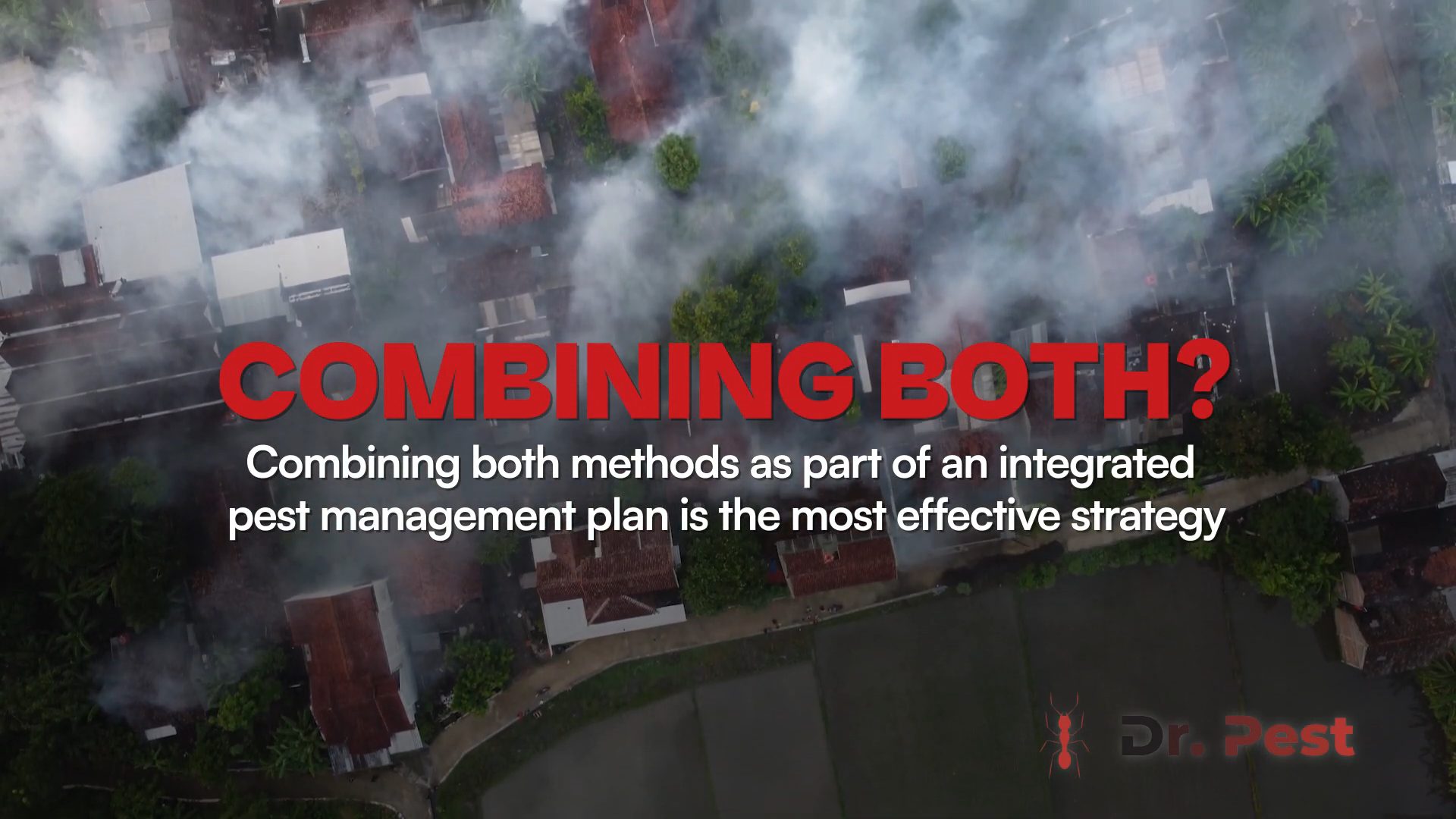
Sometimes the best solution is not choosing one method over the other but combining them. Many pest control companies recommend an integrated approach that uses fumigation for the initial elimination and fogging or targeted sprays for ongoing prevention.
For example, a warehouse might require fumigation to eliminate a beetle infestation, followed by routine fogging treatments to control flies and mosquitoes that enter from outside.
This layered approach maximizes effectiveness while minimizing chemical use.
Environmental Impact of Fumigation vs Fogging
Both fumigation and fogging rely on chemical pesticides, but their environmental impact differs.
- Fumigation uses gases that can harm non-target organisms if not carefully contained. Stricter regulations are in place to prevent contamination and ensure safe disposal.
- Fogging often uses lower-toxicity pesticides, but repeated use can affect beneficial insects and aquatic systems if oversprayed.
For environmentally conscious property owners, asking your pest control provider about eco-friendly alternatives is a smart step.
How to Decide Between Fumigation and Fogging
Choosing between fumigation vs fogging comes down to answering a few key questions:
- What type of pest are you dealing with?
- How severe is the infestation?
- Do you need long-term elimination or short-term relief?
- What is your budget and timeline?
For hidden pests that threaten property, fumigation is the clear choice. For flying insects or situations where speed matters, fogging provides immediate results.
Protect Your Property with Dr. Pest
When pests threaten your home or business, choosing the right solution is critical. Both fumigation and fogging have their place in pest control, but the effectiveness depends on your unique situation. That is why working with a trusted professional makes all the difference.
At Dr. Pest, we specialize in identifying the right approach for every infestation. Whether you need full-structure fumigation, targeted fogging, or a combination of both, our experts provide safe, effective, and customized services. We use proven methods to protect your property, your health, and your peace of mind.
Do not let pests take over your space. Contact Dr. Pest today or call (562) 488-7455 to schedule an inspection and learn whether fumigation vs fogging is the right solution for your needs.
Leave a Reply