Introduction
You keep your doors closed. Your windows have screens. You don’t leave food sitting around.
So how are pests still getting inside?
The answer is often surprisingly simple: they’re using openings you don’t notice.
To a homeowner, a small gap around a pipe or beneath a garage door may seem insignificant. To a mouse, cockroach, ant, or spider, it can be an open invitation.
This becomes especially important as Southern California moves from late summer into fall. As conditions change, homes can provide pests with reliable access to food, water, and protected shelter.
That’s why one of the most effective forms of pest prevention doesn’t begin with treating pests.
It begins by figuring out how they’re getting inside.
Here are 10 areas around your home worth inspecting before cooler weather arrives.
What You’ll Learn
- How common household pests enter homes
- Which exterior openings homeowners frequently overlook
- Why fall is a good time to inspect your property
- How landscaping can provide access to your house
- What pest exclusion means
- When an entry point may require professional attention

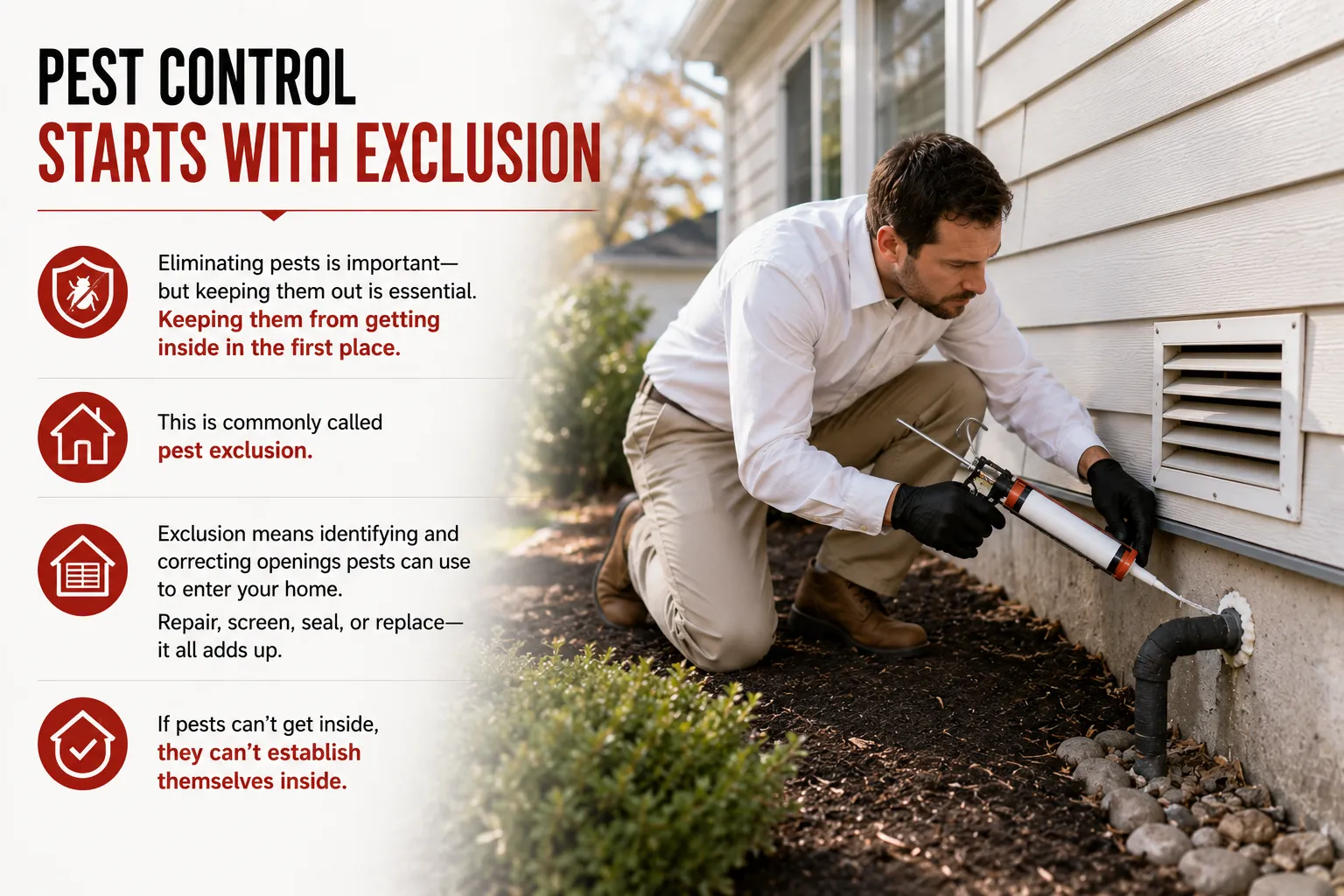
Pest Control Starts With Exclusion
When people think about pest control, they often think about eliminating pests that are already inside.
That’s certainly important, but there’s another part of the equation:
Keeping them from getting inside in the first place.
This is commonly called pest exclusion.
Exclusion involves identifying and correcting openings pests can use to enter a structure.
That might mean replacing damaged weather stripping, screening a vent, sealing a utility penetration, or addressing a larger structural opening.
The idea is simple:
If pests can’t get inside, they can’t establish themselves inside.
1. The Gap Under Your Garage Door
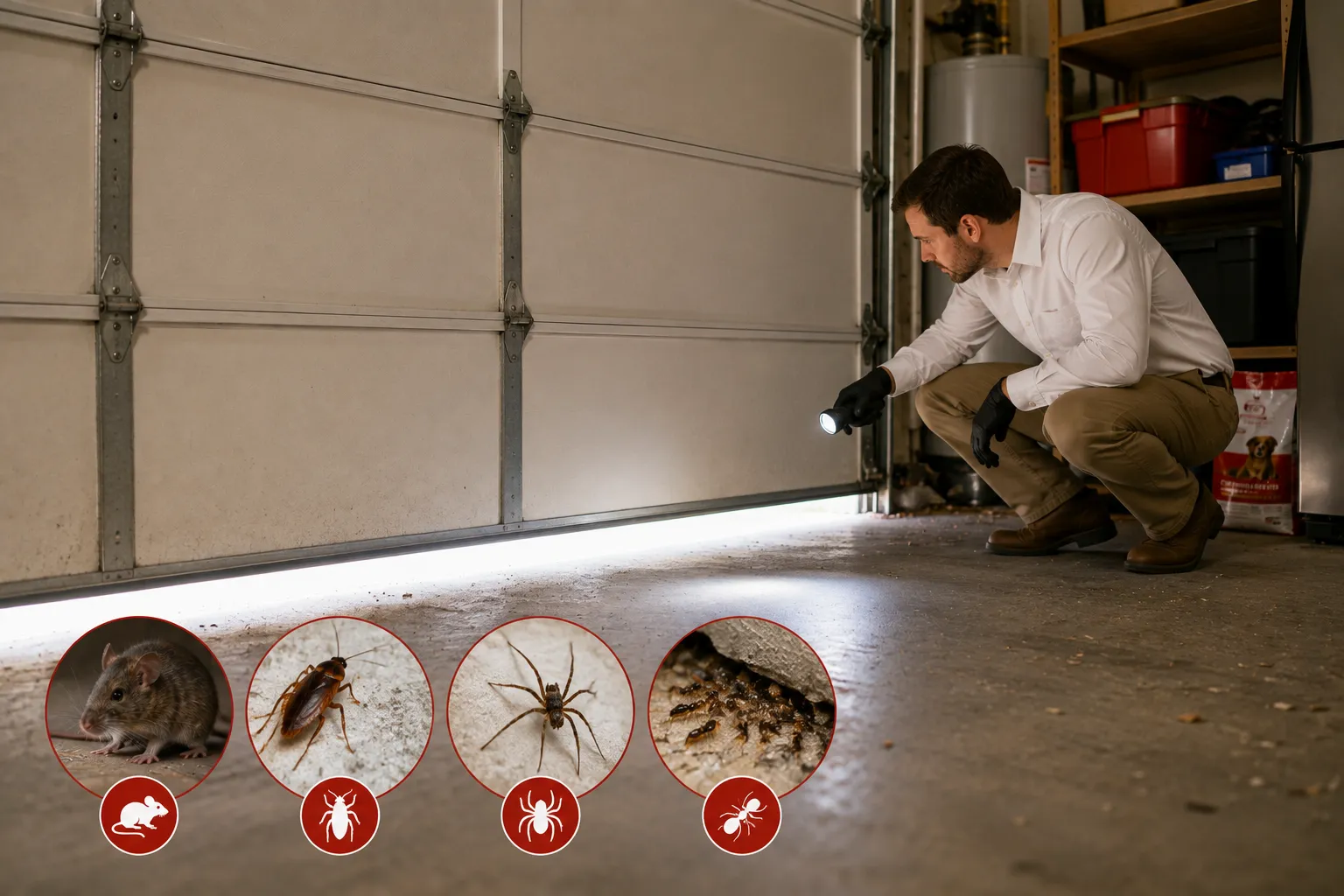
Start with one of the largest entrances into most homes: the garage.
Stand inside your garage during daylight with the garage door closed.
Can you see light around the edges or underneath it?
If you can see outside, there’s potentially enough space for pests to investigate.
Worn or damaged garage-door seals can provide access for:
- Mice
- Cockroaches
- Spiders
- Other crawling insects
Garages are particularly attractive because they frequently contain stored items, pet food, water heaters, refrigerators, and plenty of hiding places.
Check the bottom seal as well as both corners of the garage door.
2. Roof and Attic Vents
Your attic needs ventilation.
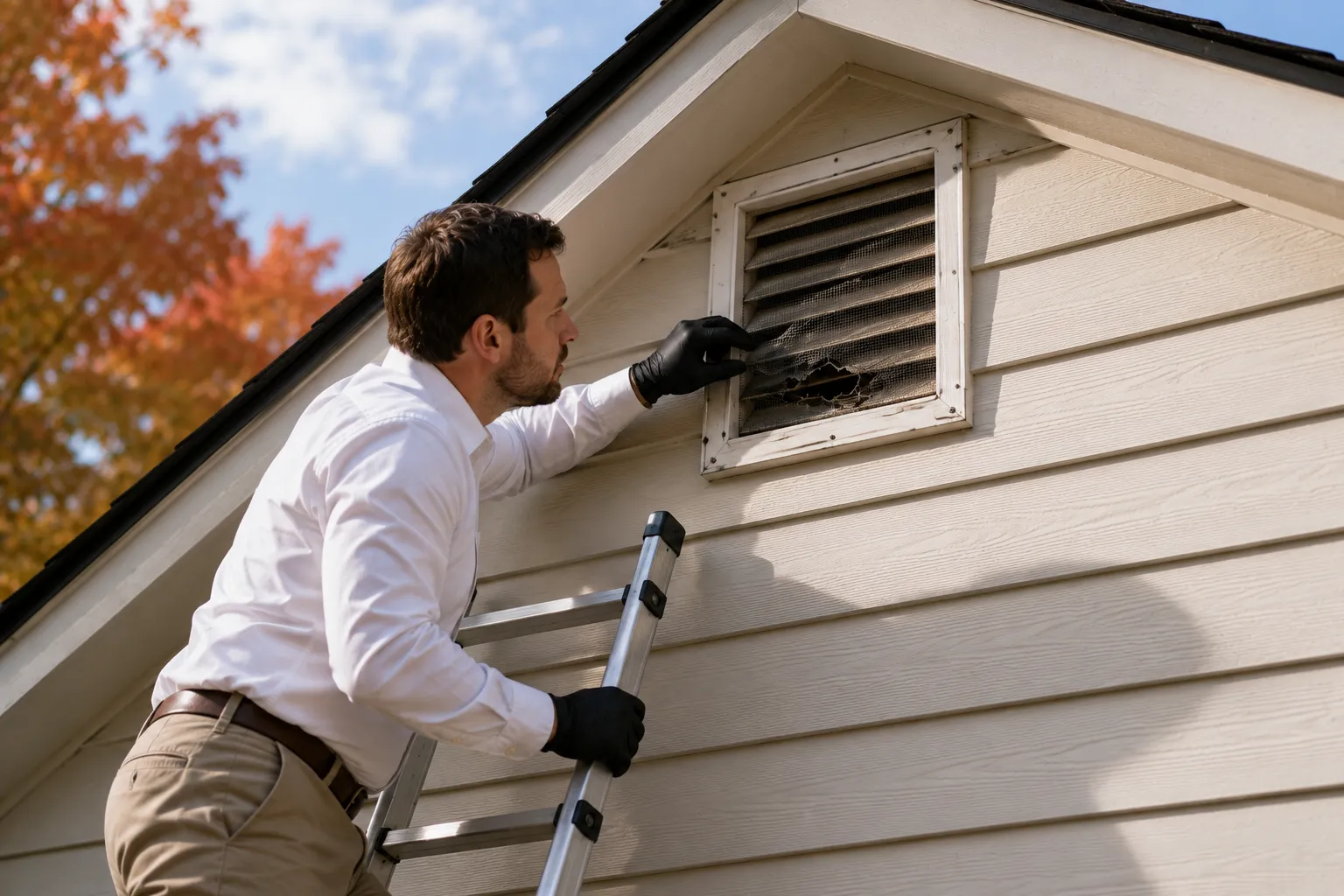
Unfortunately, damaged or missing screens can turn ventilation openings into pest entrances.
Roof and attic vents should be inspected for:
- Torn screening
- Missing screening
- Damage
- Gaps around installation points
These areas are particularly important when you’re trying to prevent rodents from accessing the attic.
Once rodents establish themselves above the living area, homeowners may begin hearing scratching, movement, or gnawing—often at night.
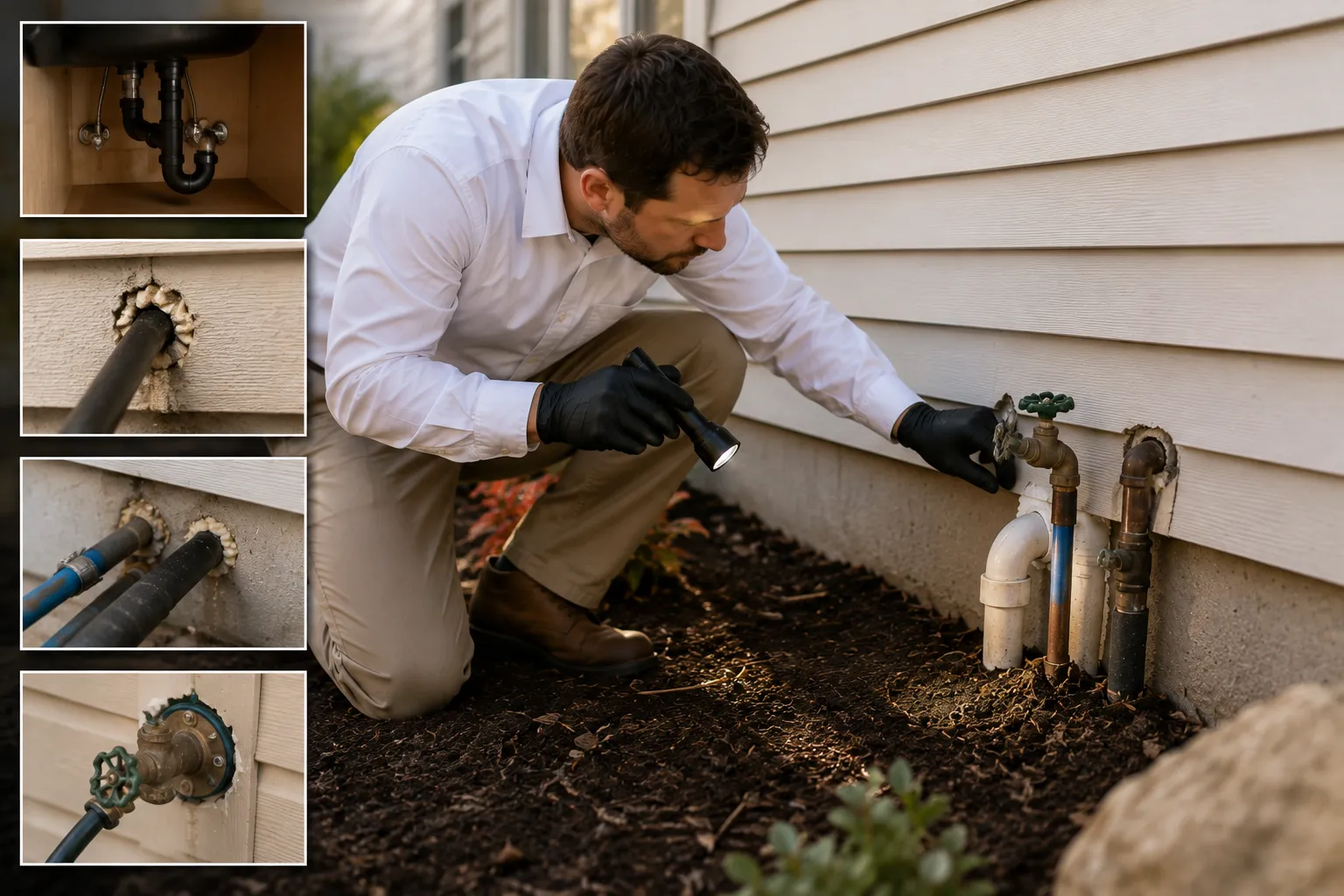
3. Plumbing Penetrations
Every pipe entering your home creates a potential opening.
Look beneath sinks and around exterior walls where plumbing enters the structure.
You may find gaps around:
- Water lines
- Drain pipes
- Irrigation connections
- Hose bibs
Even relatively small openings deserve attention.
They can provide pathways for insects and, depending on their size, rodents.
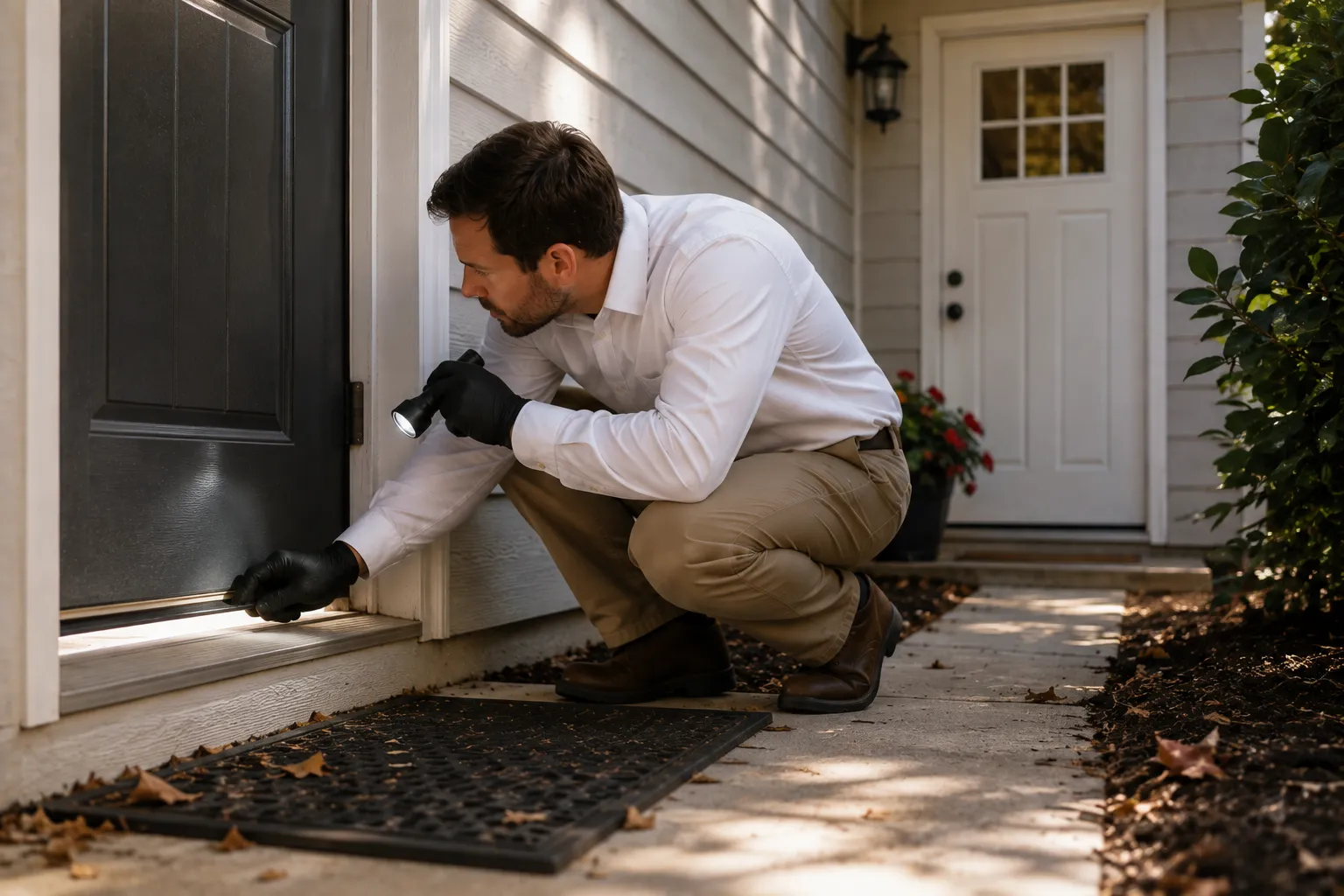
4. Exterior Doors and Weather Stripping
Your front door may seal perfectly.
What about the side door?
The garage entrance?
The door leading to the backyard?
Weather stripping deteriorates over time from repeated use, sunlight, heat, and age.
Check exterior doors for:
- Visible daylight
- Damaged seals
- Loose thresholds
- Gaps near corners
A properly fitted door shouldn’t leave obvious openings around its perimeter.
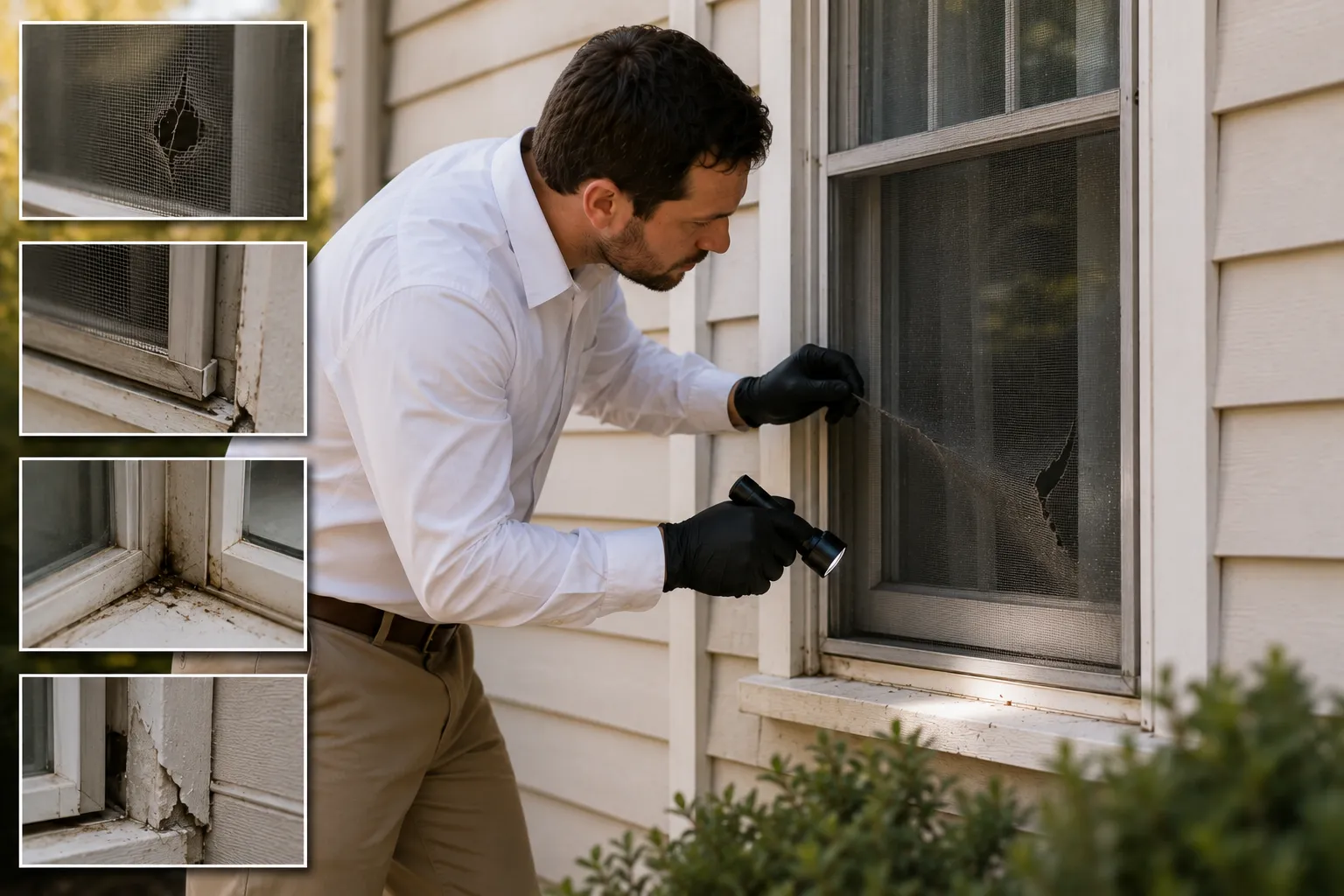
5. Window Screens and Frames
A tiny tear in a window screen may not look like much.
To a small insect, it’s plenty.
Inspect screens for:
- Tears
- Loose edges
- Bent frames
- Gaps around installation points
Also examine the area surrounding the window itself.
Cracks and deteriorated seals can create additional entry opportunities.
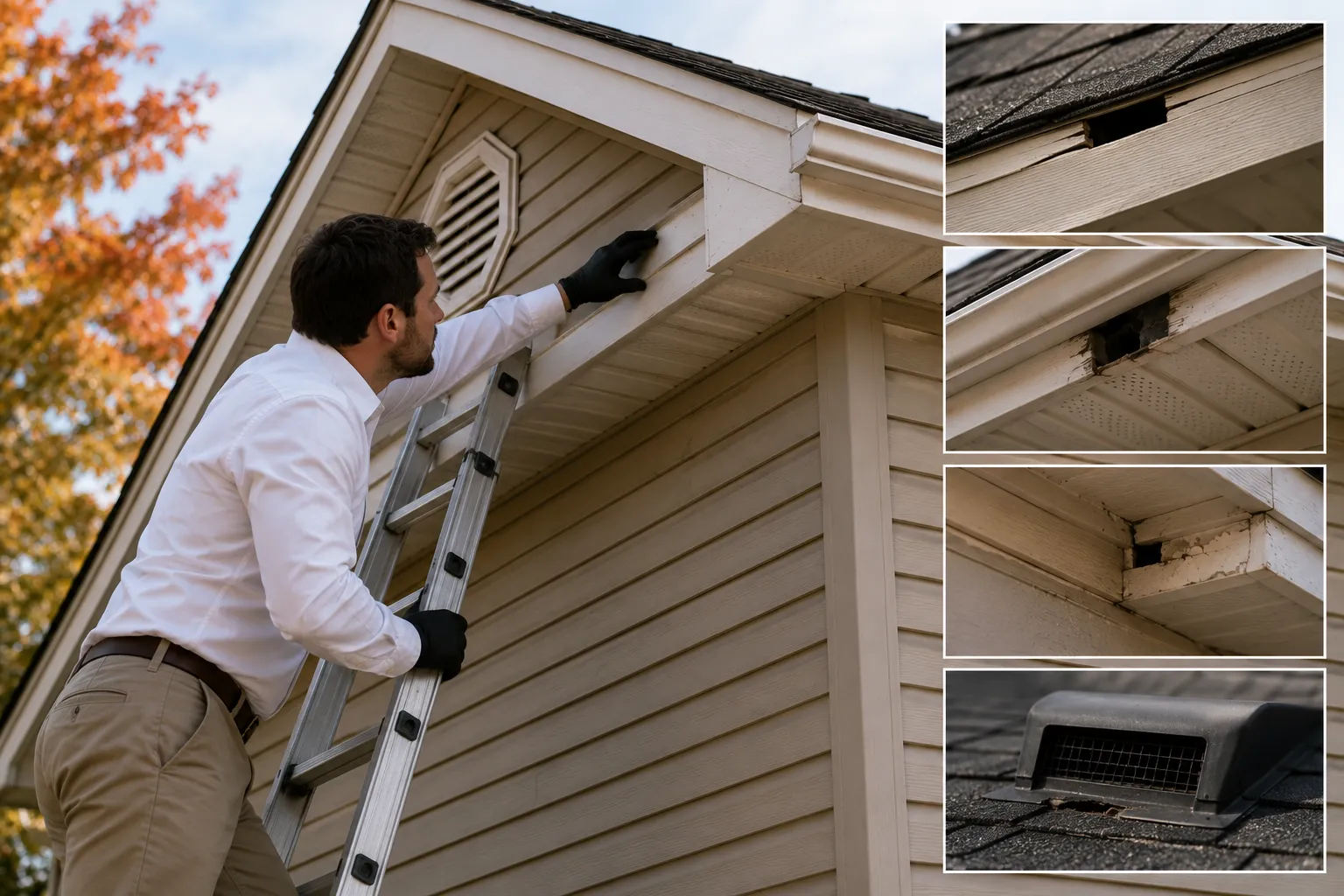
6. Rooflines and Eaves
Most homeowners inspect their property at eye level.
Pests don’t.
Rodents in particular can take advantage of openings higher on the structure.
Inspect areas around:
- Eaves
- Fascia
- Soffits
- Roof intersections
- Roof vents
Damage or deterioration in these areas can provide access to attic spaces.
If safely inspecting these areas requires climbing onto the roof, consider having a professional perform the inspection rather than taking unnecessary risks.
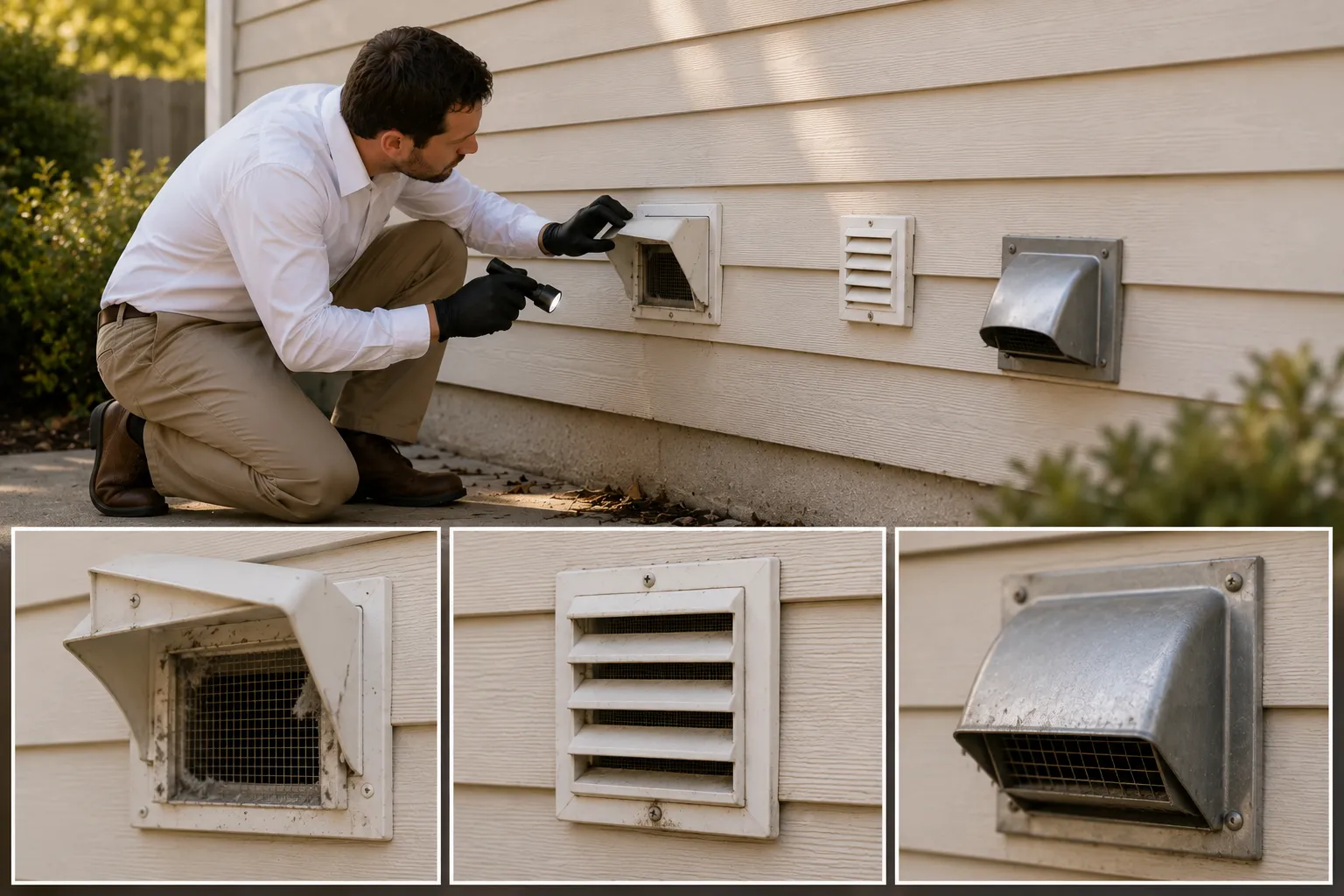
7. Dryer and Exhaust Vents
Homes require multiple exterior vents.
Depending on the property, these may include:
- Dryer vents
- Bathroom exhaust vents
- Kitchen exhaust vents
Damaged vent covers or screens can provide pest access.
These areas should remain functional and properly ventilated, so they shouldn’t simply be sealed shut.
Instead, make sure the appropriate covers and protective components are intact.
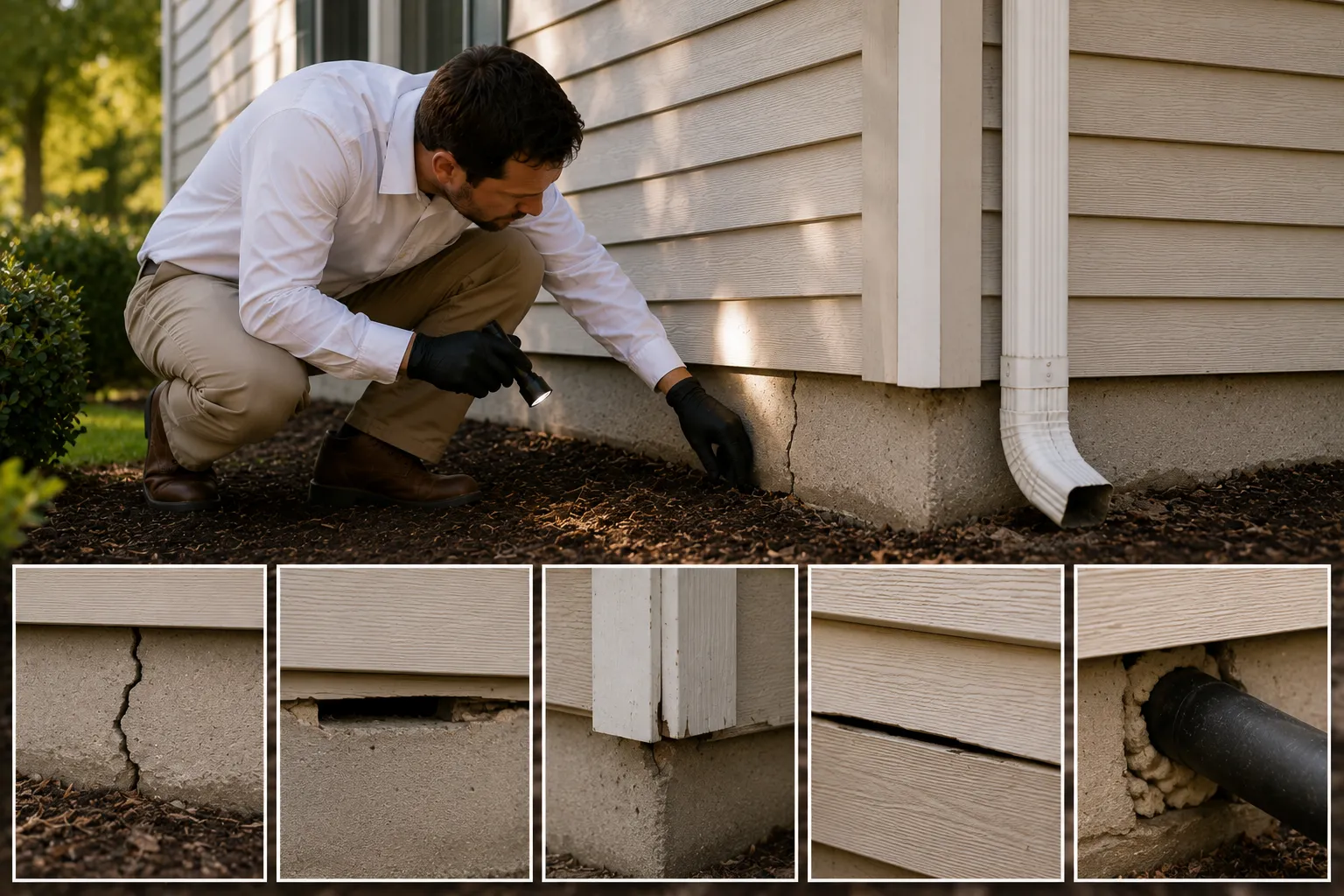
8. Foundation and Exterior Wall Gaps
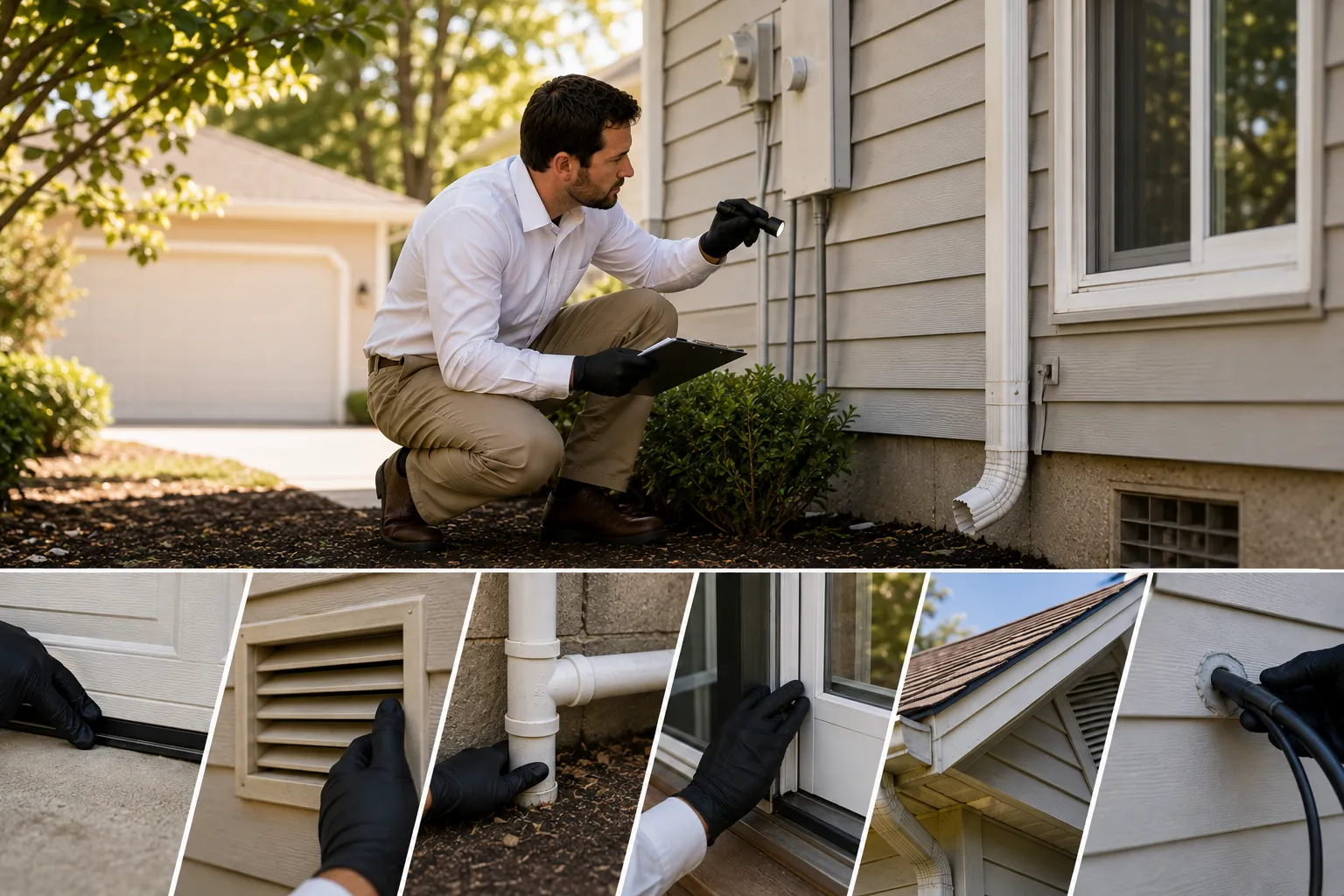
Walk slowly around the perimeter of your home.
Look closely where different building materials meet.
Pay attention to:
- Foundation cracks
- Gaps in exterior finishes
- Openings around additions
- Damaged siding
- Construction joints
Some cracks are purely cosmetic.
Others may provide pathways into wall cavities or crawl spaces.
If you’re unsure whether a crack indicates a structural issue, have it evaluated by the appropriate professional.\
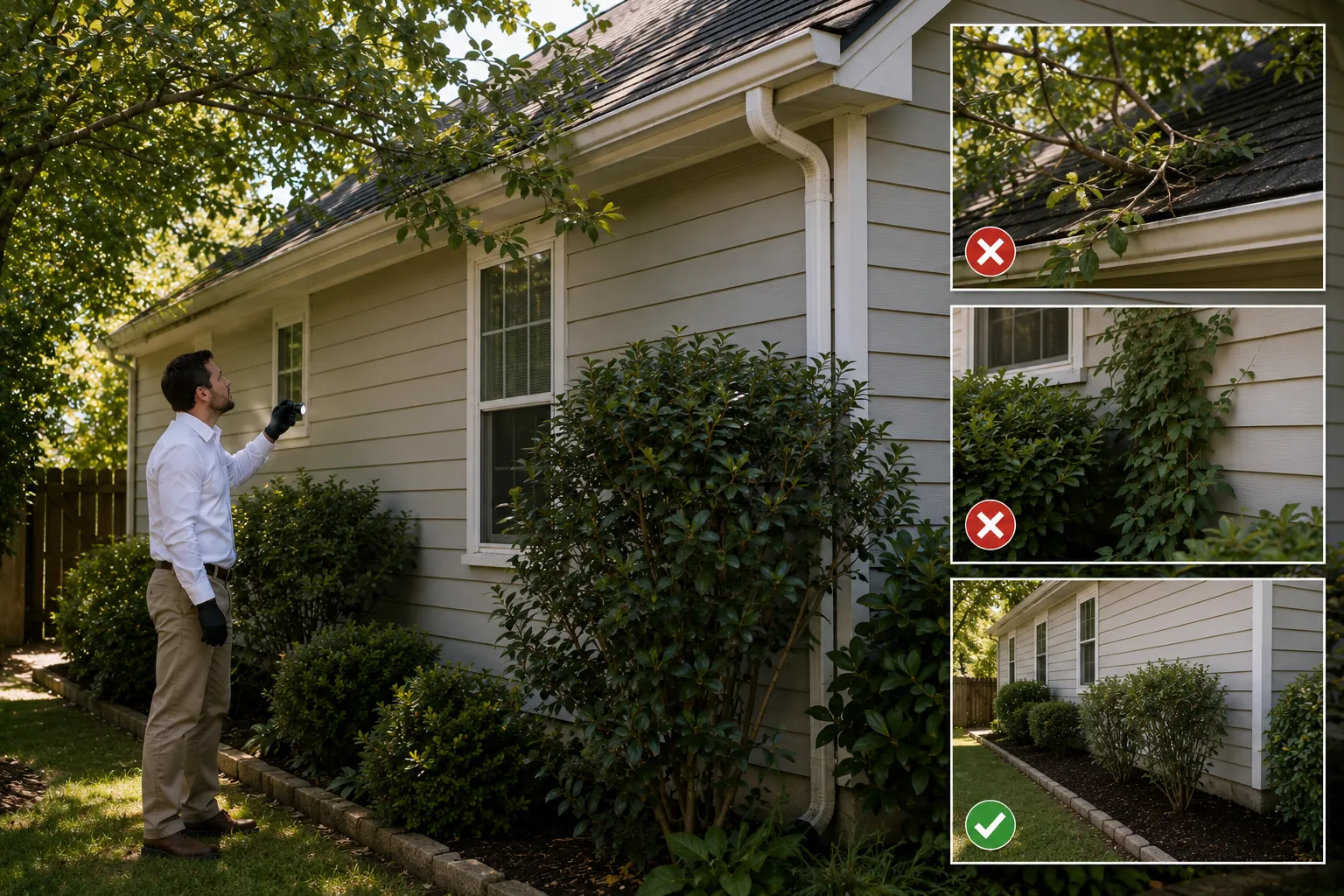
9. Trees and Landscaping Touching the House
Sometimes pests don’t need to climb the house.
Homeowners build them a bridge.
Tree branches touching or hanging directly over the roof can provide rodents with easier access to upper portions of the structure.
Dense vegetation against exterior walls can also provide shelter for insects and rodents.
Inspect:
- Tree branches
- Shrubs
- Vines
- Ground cover
Creating reasonable separation between landscaping and the building makes the exterior less inviting and easier to inspect.
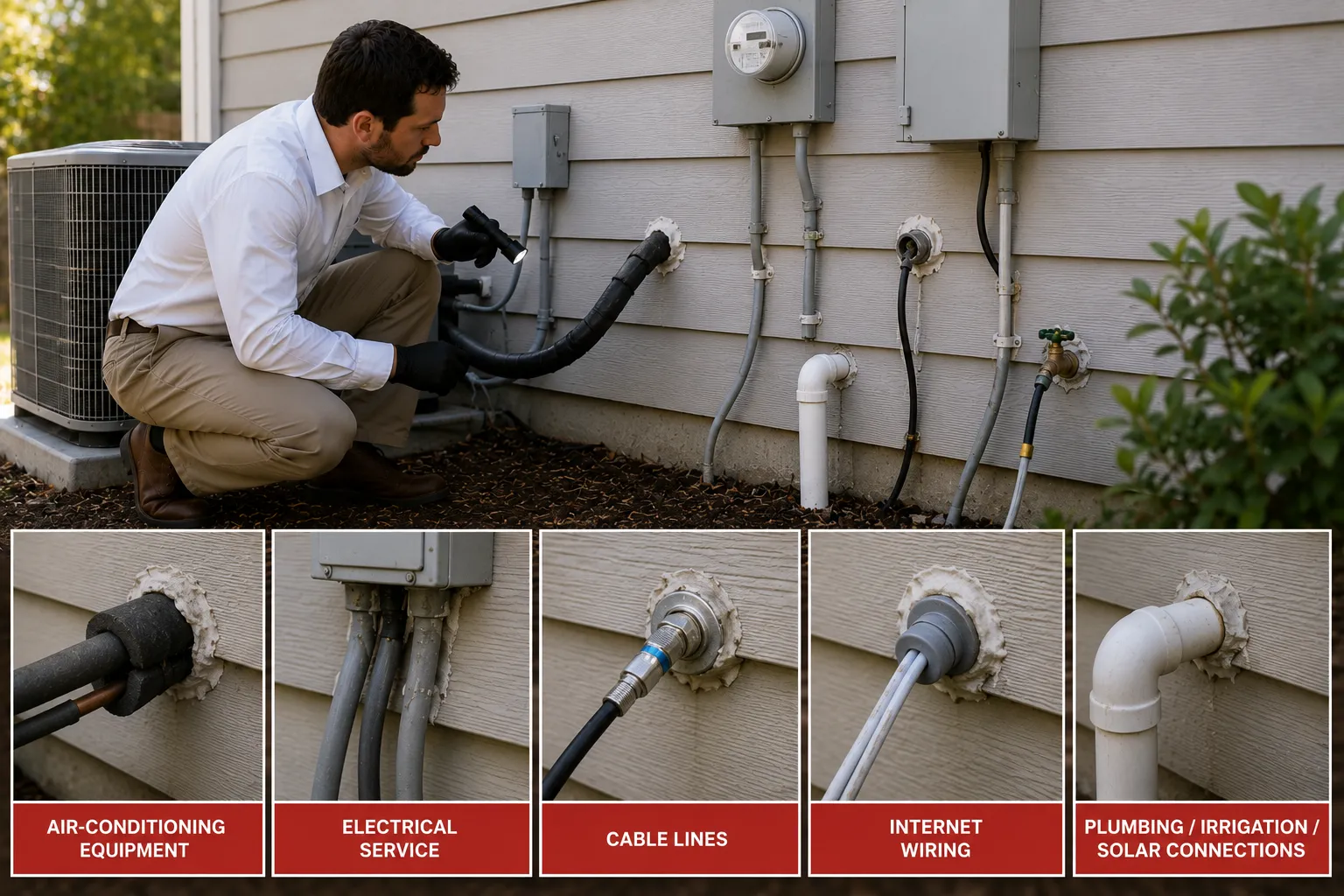
10. Utility and Equipment Penetrations
Modern homes have a surprising number of cables, wires, pipes, and mechanical connections entering through exterior walls.
Look around:
- Air-conditioning equipment
- Electrical service
- Cable lines
- Internet wiring
- Plumbing
- Irrigation
- Solar equipment connections
Installers need to penetrate the building envelope to run these systems.
If openings aren’t properly sealed—or the original sealant deteriorates—they can become pest entry points.
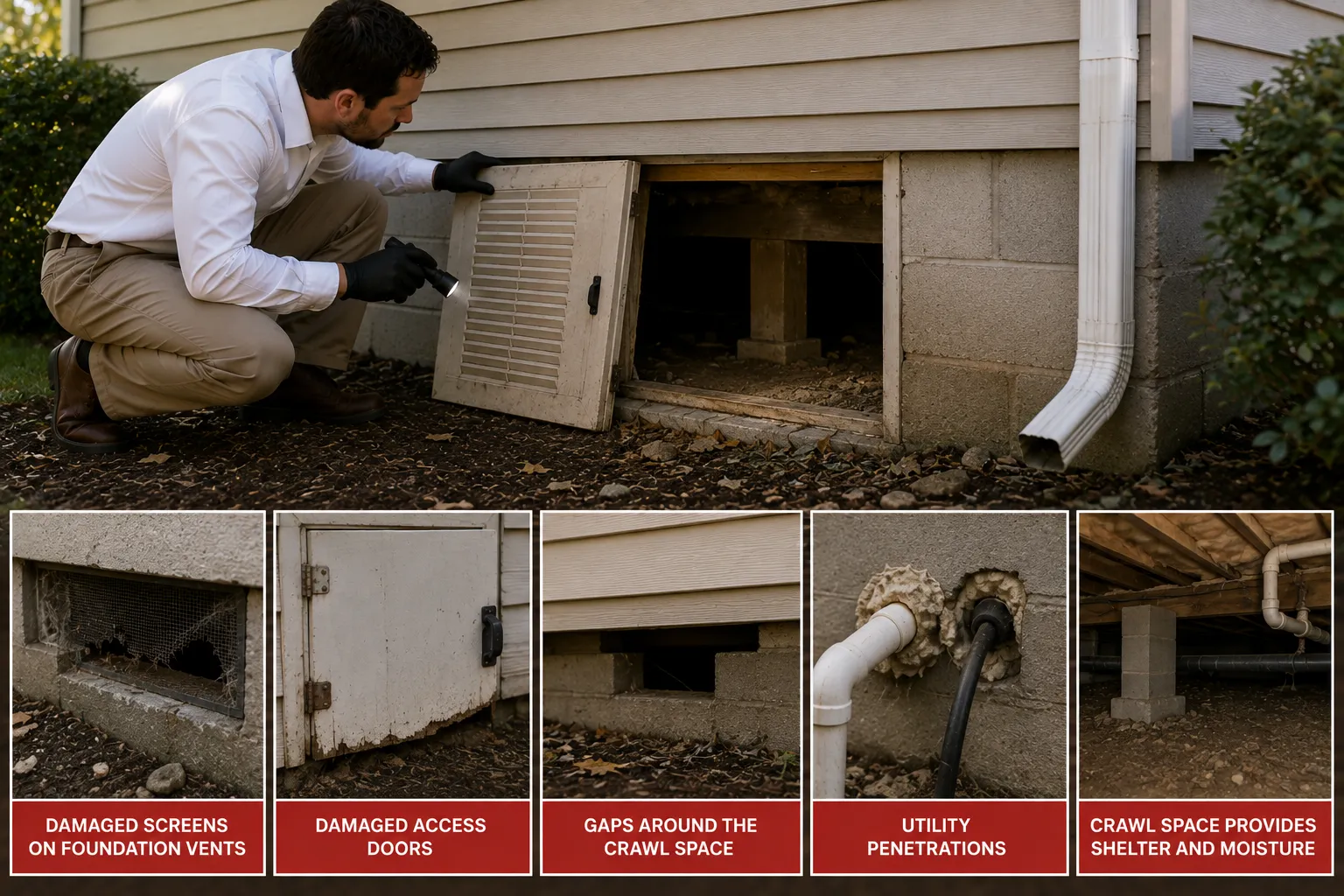
Bonus: Don’t Forget the Crawl Space
If your home has a crawl space, include it in your inspection.
Damaged screens, foundation vents, access doors, and utility penetrations may allow pests into the area beneath your home.
A protected crawl space can be particularly attractive because it provides shelter and may contain plumbing or other sources of moisture.
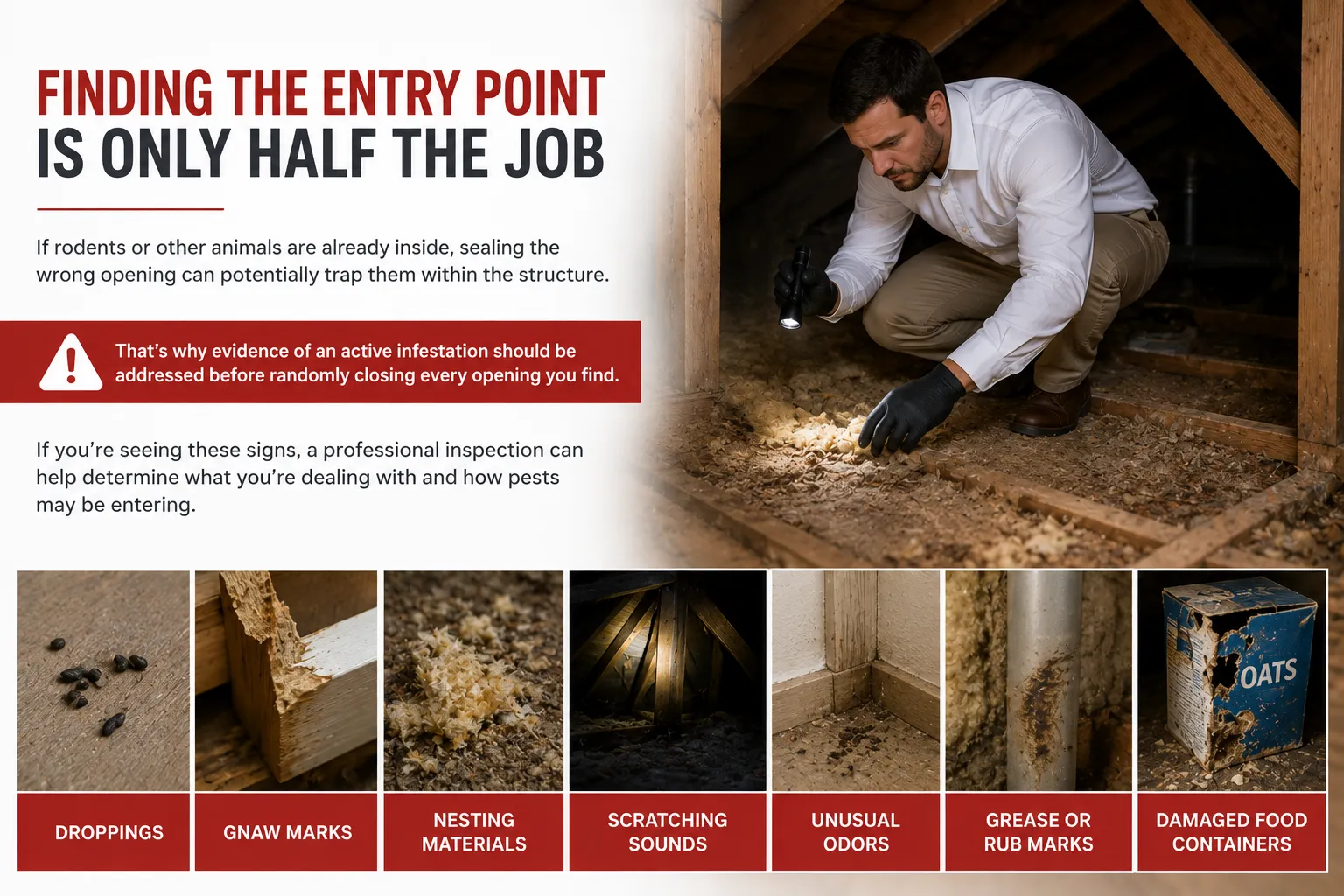
Finding the Entry Point Is Only Half the Job
Here’s where pest exclusion becomes more complicated.
Finding a hole doesn’t necessarily mean you should immediately seal it.
If rodents or other animals are already inside, sealing the wrong opening can potentially trap them within the structure.
That’s why evidence of an active infestation should be addressed before randomly closing every opening you find.
Signs of activity may include:
- Droppings
- Gnaw marks
- Nesting materials
- Scratching sounds
- Unusual odors
- Grease or rub marks
- Damaged food containers
If you’re seeing these signs, a professional inspection can help determine what you’re dealing with and how pests may be entering.
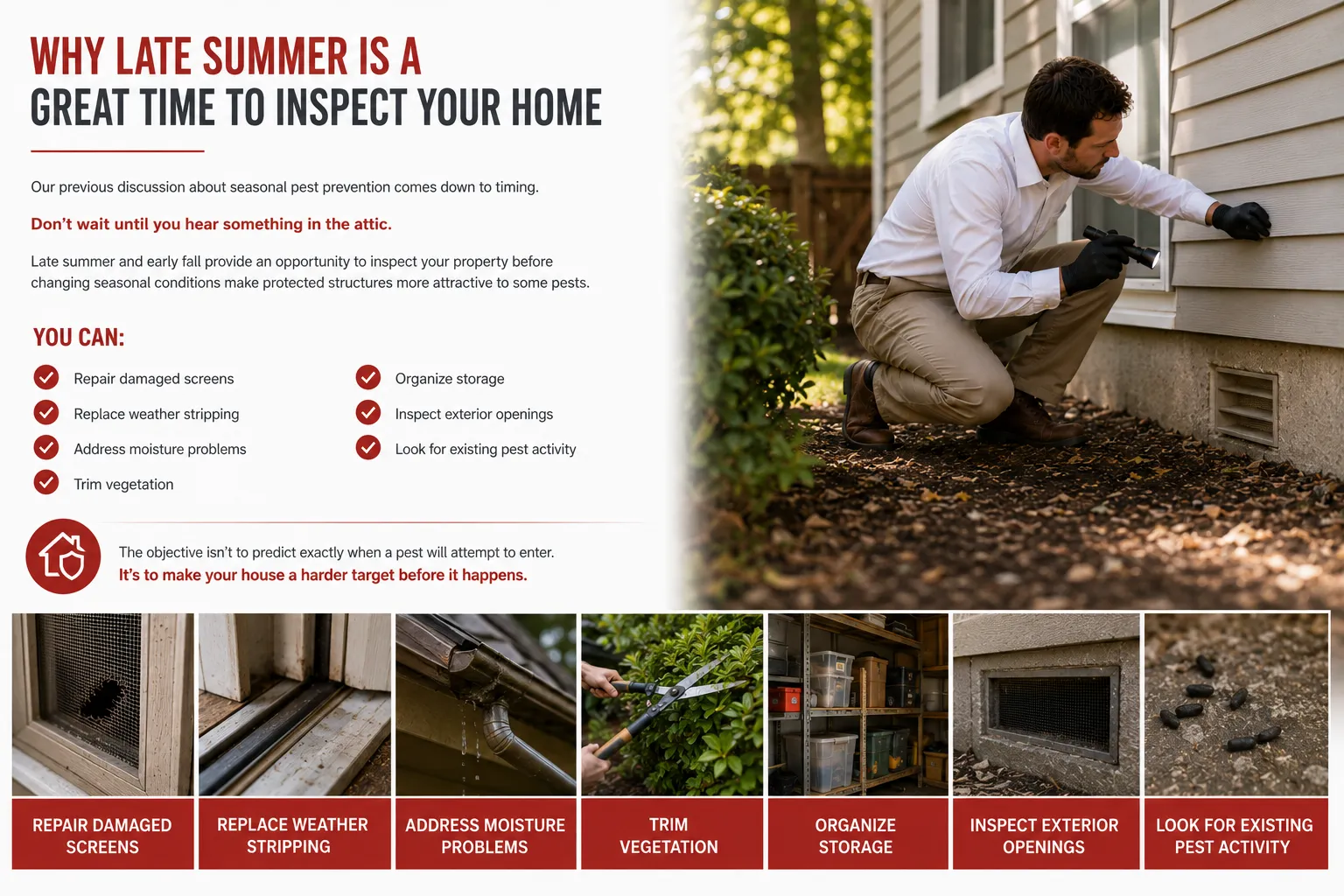
Why Late Summer Is a Great Time to Inspect Your Home
Our previous discussion about seasonal pest prevention comes down to timing.
Don’t wait until you hear something in the attic.
Late summer and early fall provide an opportunity to inspect your property before changing seasonal conditions make protected structures more attractive to some pests.
You can:
- Repair damaged screens
- Replace weather stripping
- Address moisture problems
- Trim vegetation
- Organize storage
- Inspect exterior openings
- Look for existing pest activity
The objective isn’t to predict exactly when a pest will attempt to enter.
It’s to make your house a harder target before it happens.
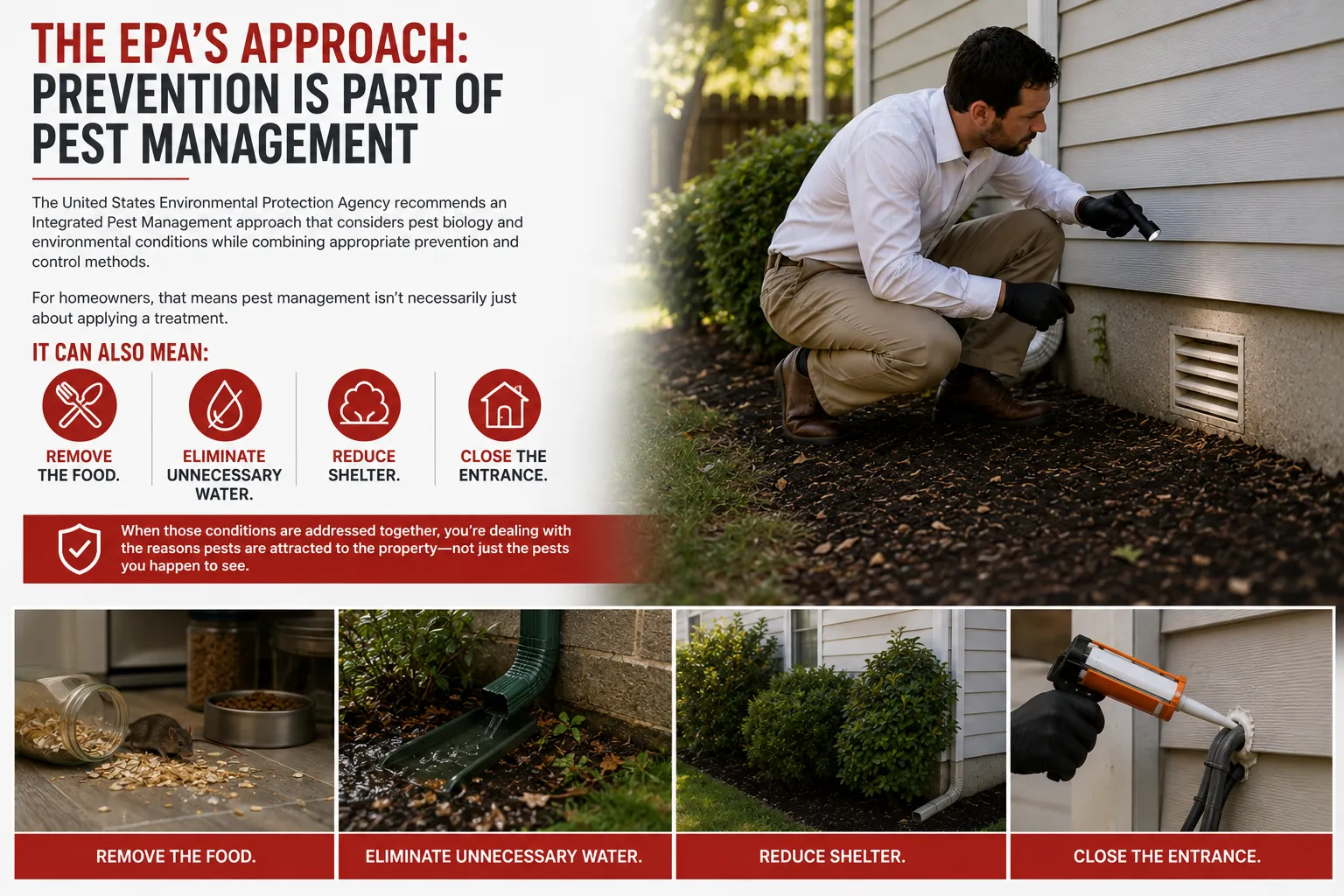
The EPA’s Approach: Prevention Is Part of Pest Management
The United States Environmental Protection Agency recommends an Integrated Pest Management approach that considers pest biology and environmental conditions while combining appropriate prevention and control methods.
For homeowners, that means pest management isn’t necessarily just about applying a treatment.
It can also mean:
Remove the food.
Eliminate unnecessary water.
Reduce shelter.
Close the entrance.
When those conditions are addressed together, you’re dealing with the reasons pests are attracted to the property—not just the pests you happen to see.
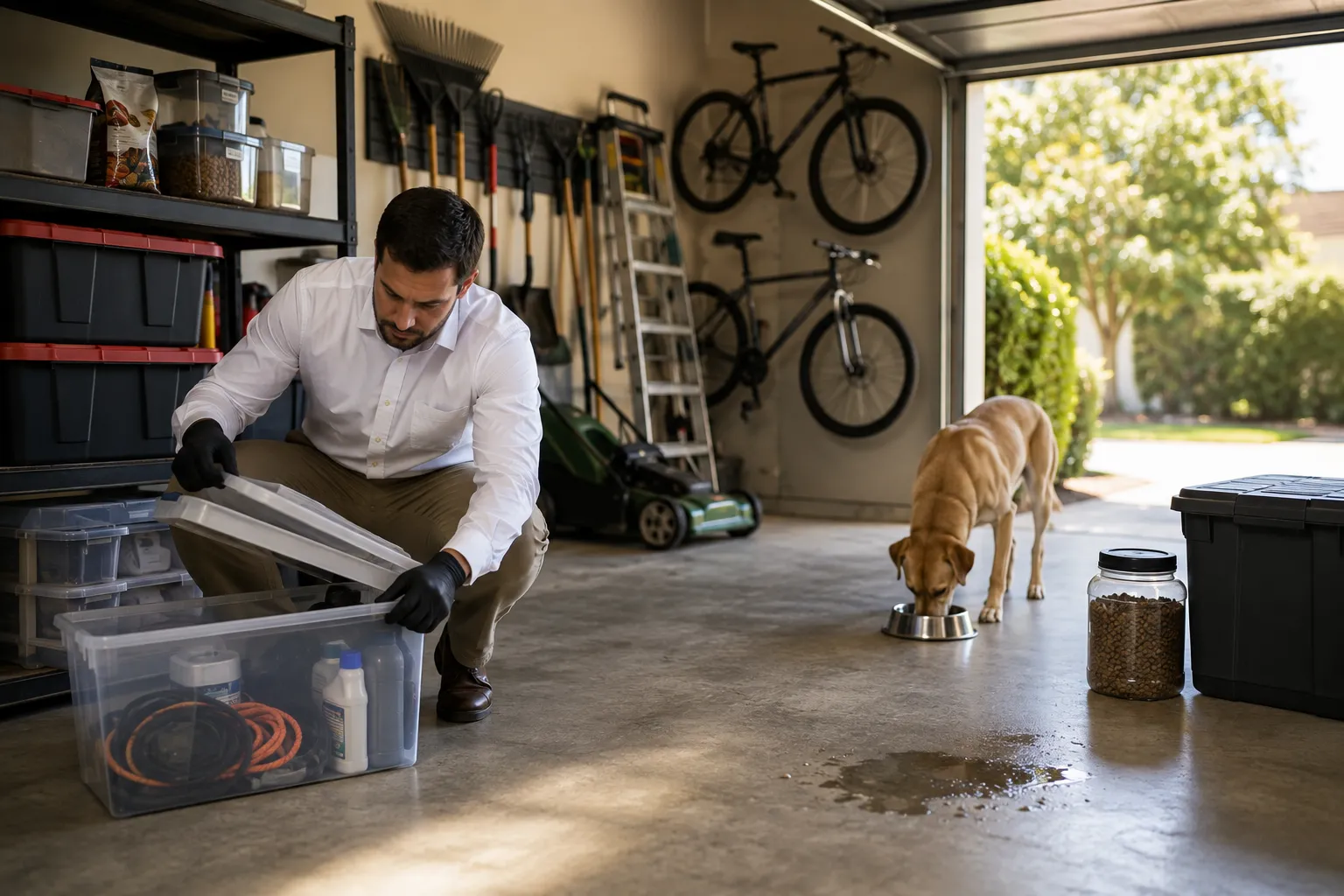
Make Your Garage Less Attractive Too
Sealing the garage door is helpful, but what happens if a pest gets inside?
Don’t give it a reason to stay.
Consider moving items from cardboard boxes into sealed storage containers.
Keep pet food and bird seed in secure containers.
Clean spills and food residue.
Check for water leaks.
Reduce unnecessary clutter.
The easier your garage is to inspect, the easier it is to notice evidence of pest activity early.
Residential Pest Exclusion Is Different for Every Home
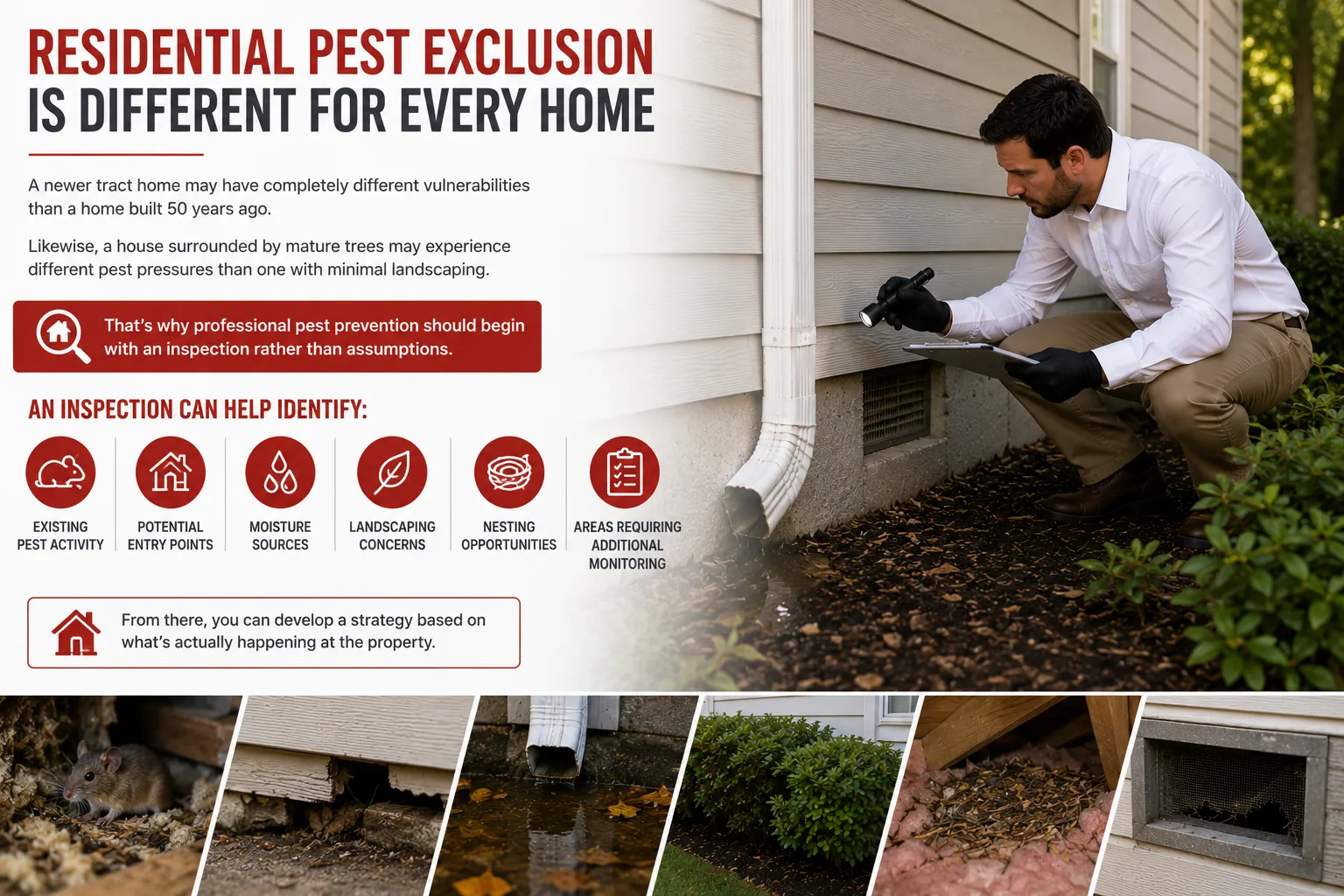
A newer tract home may have completely different vulnerabilities than a home built 50 years ago.
Likewise, a house surrounded by mature trees may experience different pest pressures than one with minimal landscaping.
That’s why professional pest prevention should begin with an inspection rather than assumptions.
An inspection can help identify:
- Existing pest activity
- Potential entry points
- Moisture sources
- Landscaping concerns
- Nesting opportunities
- Areas requiring additional monitoring
From there, you can develop a strategy based on what’s actually happening at the property.
What About Commercial Buildings?
The same principles apply to businesses—often on a much larger scale.
Commercial properties may have additional pest entry points around:
- Loading docks
- Roll-up doors
- Delivery entrances
- Utility rooms
- Roof penetrations
- Commercial kitchens
- Trash enclosures
- Warehouse doors
High employee and delivery traffic can also make keeping doors completely sealed more difficult.
Restaurants, warehouses, offices, retail stores, apartment communities, and industrial facilities can all benefit from regular exterior inspections and exclusion.

Need Help Finding Where Pests Are Getting In?
Sometimes the evidence is obvious.
Other times, you know something is getting inside but can’t figure out how.
That’s where experience matters.
Dr. Pest provides residential and commercial pest control throughout Southern California, including inspections designed to identify pest activity and the conditions that may be contributing to it.
The goal isn’t simply to eliminate today’s pest.
It’s to help reduce the likelihood that you’re dealing with the same problem again tomorrow.
Learn more about Dr. Pest’s residential and commercial pest control services at Dr. Pest.

Conclusion
If you want fewer pests inside your home this fall and winter, start outside.
Inspect the garage door.
Look at the vents.
Check the plumbing.
Examine doors and windows.
Look up at the roofline.
Trim the trees.
Inspect every place a cable, pipe, or wire enters the house.
Individually, these openings may seem insignificant.
Together, they can provide dozens of opportunities for pests to get inside.
Finding and correcting those vulnerabilities before pests discover them is one of the smartest forms of pest control you can do.
FAQ: Pest Entry Points and Exclusion
1. How do pests get into a house?
Pests commonly enter through gaps around doors, windows, vents, plumbing, utility penetrations, rooflines, foundations, garages, and other exterior openings.
2. What is pest exclusion?
Pest exclusion is the process of identifying and correcting openings or conditions that allow pests to enter a building.
3. How do mice get inside homes?
Mice can exploit surprisingly small gaps around foundations, garages, utility lines, doors, vents, and other openings.
4. How do rats get into attics?
Roof rats may reach upper portions of homes using trees, fences, utility lines, or other structures before finding openings around vents, eaves, or rooflines.
5. Should trees touch my roof?
It’s generally beneficial from a pest-management standpoint to keep branches reasonably separated from the structure, particularly when rodents are a concern.
6. Can pests enter through a garage door?
Yes. Worn seals and gaps around garage doors can provide access for rodents and crawling insects.
7. How can I tell whether my garage door has gaps?
Close the door during daylight and look for visible light around the perimeter, particularly near the bottom corners.
8. Can pests enter through plumbing openings?
Yes. Gaps around pipes and other utility penetrations can provide entry routes.
9. Should I seal every hole I find immediately?
Not necessarily. If animals are already inside, improperly sealing openings may trap them. Active infestations should be evaluated before exclusion work is completed.
10. What are signs rodents may already be inside?
Droppings, gnaw marks, scratching noises, nesting material, unusual odors, and damaged food packaging can indicate activity.
11. Can cockroaches enter through small gaps?
Yes. Cockroaches can exploit small cracks and openings and may also enter through items brought into a building.
12. Do window screens help prevent pests?
Properly fitted, undamaged screens help reduce access for many flying and crawling insects.
13. Can dryer vents become pest entry points?
Damaged or improperly protected exterior vents may provide access. Ventilation systems should remain functional and use appropriate covers rather than simply being sealed closed.
14. Why should I inspect utility penetrations?
Cables, pipes, electrical lines, and equipment connections require openings through the building envelope, and gaps around them can develop over time.
15. Does landscaping really affect rodent problems?
Yes. Dense vegetation provides shelter, while branches and other landscaping features can provide routes toward structures.
16. When is the best time to pest-proof a home?
Pest-proofing can be done throughout the year, but late summer and early fall are excellent opportunities to prepare before seasonal conditions change.
17. Does pest exclusion eliminate the need for pest control?
Not always. Exclusion is one component of a broader pest-management strategy that may also include sanitation, monitoring, moisture management, and targeted treatment.
18. Should businesses inspect pest entry points too?
Absolutely. Commercial buildings frequently have additional vulnerabilities around loading docks, delivery entrances, kitchens, utility areas, and roll-up doors.
19. When should I call a pest-control professional?
Consider professional help if you’re seeing signs of an infestation, can’t locate the entry point, or aren’t sure how an opening should be safely corrected.
20. Can Dr. Pest inspect my property for potential pest problems?
Yes. Dr. Pest can evaluate residential and commercial properties for existing pest activity and conditions that may contribute to infestations. Visit Dr. Pest to learn more.
Leave a Reply